Friday, December 14, 2012

My Religious Philosophy - Part Two: “Religion”

Rabbi Sonsino
The universe works in wondrous ways. However, this recognition does not eliminate the problems we face in our daily life, either because of the limitations of our  bodies, the unfairness we encounter in our dealings with others, or even when we fight natural disasters not of our own making. We are devastated when tragedies mar our existence. Most of us can understand and accept that people will eventually pass away, but we find it very difficult to deal with the death of loved ones, either at the hands of others or because of natural calamities. We do not live in a perfect world, and certainly do not know all the intricacies of the universe.  Life is mysterious, and, at times, even unpredictable, requiring a wholesome perspective. For many, religion does that.

But what does the word “religion” mean? Some people derive it from the Latin “relegare” meaning to re-examine carefully, and others from “religare” meaning to connect (with God). Even though the second one is the most popular understanding of the word today, it is still vague. What does it mean to connect with God? What does God mean? Hebrew does not have a proper word for “religion.” In medieval times, we find dat, which can mean law, custom or faith. In modern Hebrew a dati is a religiously observant person.

Of the various definitions of religion, I believe, Erich Fromm (1900-1980) has provided the broadest one. He argued that religion gives the individual a “frame of orientation” as well as “an object of devotion.” Each of us has a “frame of orientation” through which we view the world, and “an object of devotion” to which we pledge ultimate loyalty. The question is how to identify these “frames” and “objects?”

Maimonides (d. 1204) defined religion as “to (intellectually) know God.” For Mordecai Kaplan (1991-1983), “the essence of every religion is the human quest for salvation (i.e.., self-realization).” In Abraham J. Heschel’s (1907-1972) view, “Religion is an answer to man’s ultimate questions.” Roland Gittelsohn (1910-1995) proposed one in line with his religious naturalism: “the study of the mutual spiritual relations between human organisms and their total cosmic environment.” I prefer the one advanced by Alvin Reines (1926-2004): “Religion is the human person’s response to the conflict of finitude,” namely, how do we deal with the realization that we are all limited and are destined to die one day?  In this sense, I consider everyone religious because we all have the same concerns and expectations. Whether we are Jewish, Christian, Muslim (or other), how we personally respond to our existential questions becomes our religion.

My Concept of God
In my book, The Many Faces of God, I have summarized my view on God in these words:
“Like others, I, too, went from stage to stage in my theological development. I consider myself more of a researcher and teacher rather than a systematic theologian. I like to look for legitimate options, and make them available to my students and readers as viable and authentic responses to matters of life and death. As an individual I, too, had to struggle with questions of existence, and looked for explanations that made sense to me. I gave up my childhood notion of classical theism, because my logical mind and inquisitive nature would not yield the conclusions I was asked to accept. I find mysticism appealing but not totally compatible with my rationalistic tendencies. I am not satisfied with the claim of the religious humanists that God, as the highest images of ourselves is capable of answering our queries. Also, I cannot conceive of a theology that looks at the universe from the divine perspective. I believe theology starts with our own questions, and ends with our tentative answers.

I am more attracted to the views of the religious naturalists who maintain that there is an energy that sustains the universe. Based on observation and analysis, I see a certain order in the world around us, and conclude, much like some of the medieval thinkers and even a few early rabbis, that this order implies an ordering mind, or in my case, an ordering power and energy that stands for God. The laws of nature, I argue, are simply a manifestation of this universal energy that makes possible for me to exist. And for this, I am very appreciative, and express my thanks to God through prayers of gratitude and works of loving-kindness that benefit my family and community. I affirm the freedom of the human will, and can live with the realization that I don’t have all the answers for the tension that exists between the realities of good and evil, because I do not know all the inner workings of the universe. In the spirit of Spinoza, I say that if we knew how the world operates, we could predict our next move. But alas, this is not within our ability. So, we live in an imperfect world and with limited abilities to understand the mysteries around us, while desperately looking for meaning and purpose in our daily struggles” (pp.250-1).

Monday, December 10, 2012

My Religious Philosophy; The Life of Informed Choice

Rabbi Rifat Sonsino
Over the years, in different lectures and publications, I have identified the main points of my religious philosophy. In an attempt to bring them all together, albeit in a succinct form, I wish to share it in various installments in my upcoming blog postings. Here is the first one:

PART ONE: KNOWLEDGE

I have always been interested in history, for, I believe, we cannot know who we are and what we have done unless we find out where we have been before, and learn from it, for, as George Santayana once said, "Those who cannot remember the past are condemned to repeat it" (Life of Reason, Reason in Common Sense, Scribner's, 1905, p. 284). Yet, I recognize that there is no such a thing as an “objective” history, because facts still need to be interpreted, and that is purely subjective. Even if one assumed that “facts” could be established through scientific methods (e.g. DNA), they still need to be evaluated, analyzed, sifted through, kept or discarded. As we know, two people can witness the same accident and come up with two different views of it. There is also the possibility that the witnesses would ignore or discard some of the facts, just as every historian picks and selects those events that make a difference. There is no end to recording every detail of what happened in the past.

For centuries, philosophers have been trying to find out how we know, and have developed a series of epistemological theories to explain this puzzle, none of which answers all our questions adequately.  I agree with the empiricists that we know what we experience, and that, limited human beings as we are, complete knowledge of the “thing in itself” (das Ding an sich) is, as Kant remarked, beyond our comprehension or ability to grasp, collect and record. Consequently, if all knowledge is subjective and if we cannot have full knowledge of things, we are only left with historical novels.

The realization that our knowledge is limited has led me to concentrate on concepts and values in historical and religious texts that are open to interpretation. Now, that is something we can argue about. Some will approve of these notions, others will take exceptions, but at least no one would claim that we are dealing with “the Truth,” which is both elusive and unattainable.

The discussion about values, however, requires that we acknowledge the variety of valid positions on similar subjects. This search for choices has informed my entire rabbinic and academic career from the very beginning. Thus, for example, in Finding God (NY: URJ Press, 1986) and in Many Faces of God (NY: URJ Press, 2004), I pointed out that throughout history Jewish thinkers have maintained a variety of God concepts that are based on the principle of the divine unity. We don’t know what or who God is, but we can cite a number of Jewish views about God from which people could select as one as their own. Similarly, in my book, Six Jewish Spiritual Paths (Vermont: Jewish Lights, 2000) I viewed spirituality from a wider perspective, and offered a few options (such as, spirituality through study, meditation, ritual, good deeds etc.) to highlight the variety of spiritual experiences in Judaism.

The search for religious choices can only be possible through study. Hillel used to say lo a'm haaretz hasid (“an ignorant person cannot be pious.” See, Avot 2: 6).  Reform Jewish teachers have insisted that the choices we make must be “informed” choices. We must know in order to choose.

THE STARTING POINT: THE SENSE OF WONDER

When I wake up in the morning and realize that I am alive in a world that operates in reliable yet mysterious ways, I am moved to express gratitude to God that made me part of it. Abraham J. Heschel once wrote, “Wonder or radical amazement is the chief characteristic of the religious man’s attitude toward history and nature.” (See, God in Search of Man;  Philadelphia: JPS, 1962, 45). The awareness that the universe has an intricate composition has led many, including me, to revere life. Not only am I in awe before the workings of the world, but I am equally struck by the way our bodies operate harmoniously most of the time. I view human beings as bulks of energies stimulated by an inner force. How does the heart know to beat regularly? It is marvelous to realize how our digestive system works. The ancient rabbis, noting this wonder, even penned a prayer to be said after one wakes up: “Blessed are You, God, who has formed the human body in wisdom, and has created in it intricate passages, vessels and openings. It is clear to You that if one of them is blocked or opened, we could not stand before You. Blessed are You, God, who heals all flesh in a wondrous way.”

Thursday, November 29, 2012

Would You Live in Paradise?

Rabbi Rifat Sonsino
For thousands of years, people have dreamed of living in the hereafter in a place called Paradise, enjoying a comfortable, easy life. To me that would be the most boring place in the universe. Let me explain.

The idea of “paradise” (an old Persian word that is also found in Hebrew, pardes, meaning “orchard” or “garden”) goes back to the ancient Near Eastern as well as other Mediterranean societies. The Sumerians referred to it as “Dilmun,” the Greeks spoke of “Elysian Fields”; the Hebrew Bible has gan e’den (Garden in/of Eden) and the Arabs mention “Djennet.” According to some ancient Rabbis, in paradise (also referred to as ‘the world to come’) “There is neither eating nor drinking; no procreation of children or business transactions, no envy or hatred or rivalry; but the righteous sit enthroned, their crowns on their heads, and enjoy the luster of God’s presence” (BT Ber. 17a). The Quran describes Djennet as a place where people enjoy all kinds of delicious food and wines, but also the company of wide eyed-beautifully shaped wives (Sura 54).

In medieval times, Dante (14th cent.) and, his Jewish counterpart, Immanuel ben Solomon of Rome, came out with different images, all of them based on speculation and wild imagination.

To me paradise, however conceived, sounds like a dull place, with nothing to look forward, where work has no meaning and, no matter what you do, your future is assured. Is this the kind of life we want?

I prefer to live in a world, here on earth, which, though not perfect, is open to possibilities for personal growth, where work gives meaning and purpose to one’s life, where love creates deeper bonds, where the realization of our human limitations and our eventual death provides an incentive to do something good for others. I go with the Psalmist who declared, “The righteous shall inherit the land, and live here in it forever” (Ps. 37: 29). I personally would skip the “forever” part. After I am gone, the energy I represent will, I assume, become part of the energy of the universe, and my name will endure as long as some people remember it.

The Bible mentions that Adam and Eve lived in gan e’den but were kicked out, because, having eaten from the tree of knowledge, they could now attempt to eat from the tree of life and become immortal like God (Gen. 3: 23). Most Christians refer to this story as the “Fall.” Though there were some Jews who did share this belief (see, II Esdras in the Apocrypha), mainline Judaism has viewed this parable, not as a Fall, but as the emergence of conscience, which, for me, is a good thing. I think the biblical story of Paradise is telling us that humans must accept their limitation and mortality, and that with knowledge comes the responsibility of making moral choices.

So, keep dreaming about paradise, if you wish. As for me, I am happy to live in a real world, here on earth, with all of its imperfections, where I can grow, feel, love, learn, and mature. I admit, however, that a good health and a few bucks would make things much easier.

Rifat Sonsino
Nov. 2012

Note: If you wish to receive Rabbi Sonsino's blog postings regularly, please sign up as a fellow in www.rsonsino.blogspot.com

Monday, November 12, 2012

Bucket Filling and Chesed


This fall, the teachers of the Children’s Center have been on a journey of learning in the course, “Teaching and Parenting Through a Jewish Lens.” Last week’s stop on our journey, allowed us to explore the concepts of chesed (love and kindness) and tzdaka (justice and charity).

Ronit, our teacher, eloquently connected our current curriculum of bucket filling to chesed. In the story, “Have you Filled a Bucket Today?” it is written, “All day long everyone in the whole wide world walks around carrying an invisible bucket.” Ronit explained that what we fill these buckets with is in fact, chesed. Together we explored many texts and interpretations regarding chesed. One interpretation that particularly rung true of bucket filling was, “The challenge of activism is to ignite the divine spark present in the human spirit (Rabbi Avi Weiss, Spiritual Activism.”

As a room of educators, we discussed this idea of doing chesed and igniting the divine spark in each child. In the Kohavim class, we are thinking a lot about how when you fill someone’s bucket your bucket is also filled. When you do chesed, it ignites this spark within you. The spark is in everybody, but it needs to be ignited. As educators, we are striving to understand each of your children and support them to ignite their own spark. As we left the wonderful day of teacher learning, many of us were inspired by the natural connection between bucket filling and Jewish values. We are eager to expand on our bucket filling curriculum by connecting it the chesed, as well as igniting the spark in each child.

-Jesse Feigenbaum, Children's Center Teacher

Thursday, November 8, 2012

"God Created" - What Does "Created" Mean?

Rabbi Rifat Sonsino
When we read an ancient text, we tend to read it through the eyes of our contemporary culture, but that does a disservice to the original material written under different assumptions. A good example is the famous Creation story in the Bible.

When medieval thinkers discussed the biblical story of creation, they maintained that this had to be “ex nihilo,” namely “[creation] from nothing.” Otherwise, God would have to compete with another divinity that is eternal, negating the belief in monotheism. However, when ancient people thought of creation, they did not worry about whether or not creation they to be “out of nothing,” because that was not the way in which they usually conceived of “creation.” For people in ancient Egypt and Mesopotamia, creation was more like assigning a function to an already existing matter. In fact, in ancient Egypt, creation was thought of taking place daily! This reminds me of the Midrash that tells us that God went on creating other worlds and destroying them until God created the one in which we live (Gen. R. 3: 7) as well as the rabbinic prayer that praises God for renewing the works of creation daily: “In Your goodness, You daily renew creation” (Mishkan T’filah, p. 228).

In the Bible, there are two parallel creation stories: In the first (Gen. 1: 1-2:4a), God creates the world by uttering a word: “God said,’ Let there be light’; and there was light” (Gen. 1: 3),” whereas in the second (Gen 2:4b-24), God, working like a potter (yotzer), creates (yatzar) Adam (see, Gen. 2: 8) by giving shape to matter, as if it were, with his hands . The editor/s of these stories did not consider the issue of creation out of nothing. It is only modern translators who, reflecting the medieval debate, rendered the very first verse of Genesis as: “In the beginning, God created the heavens and the earth.” This is a wrong translation, as some medieval rabbinic commentators, Rashi included, already pointed out. In Hebrew bereshit is not “In the beginning,” but “in the beginning of” [creation]. Thus, the new Jewish Publication Society correctly translates, “When God began to create heaven and earth..….God said, ‘Let there be light’; and there was light.” Therefore, the first created item was “light.” This approach seems to be more in line with modern scientific explanations of the “creation” of the universe, the “big bang,” when billions of years ago, a huge molecular cloud collapsed and fell under the influence of gravity; ever since, the universe appears to be expanding.

“Light” --This is what we need in our time: not medieval assumptions or superstitions, but a scholarly and critical study of ancient texts that would give justice to the editors’ intention, whether we agree with them or not.

Rifat Sonsino
Nov. 2012

Monday, October 22, 2012

"Mazal Tov"--What Does It Really Mean?

When Jews wish to congratulate other people, they usually exclaim in Hebrew “Mazal Tov.” I am glad we do not dwell on the literal meaning of these words, because if we did, most of us would not say them at all. But words change meaning, and “Mazal Tov” is one of them.

Literally, “Mazal Tov” signifies “good fortune.” In Hebrew, “Tov” means “good” and “mazal” (pl. mazalot; from the Akkadian mazaztu or mazazu) is an astrological expression, referring to the heavenly constellations or the stars in the zodiac, which presumably have influence on human beings and, in fact, determine their destiny. So, when we wish others “Mazal Tov,” we are hoping that the stars will be favorable to them.

Traditional Jewish texts reflect an ambivalent attitude regarding astrology. Many Biblical texts consider it of foreign origin. Thus, for instance, some prophets scoff at “star-gazers” (cf. Isa. 47: 13; Jer. 10:2) among the nations, and biblical law prohibits the practice of divination and soothsaying (Lev. 19: 26; cf. Deut. 18: 10) among the Israelites. But the practice must have been extensive in ancient Israel, even in the holy temple, for in the 7th cent. BCE, King Josiah of Judah suppressed the priests who made offerings “to the sun, moon and constellations (mazalot)” (II K 23: 5).  On the other hand, Job states that it is God who sets the stars (here called mazarot in 38: 32) in their courses.

Post biblical literature knows of astrology but presents a mix bag. While the Book of Enoch (2nd cent. BCE) considers it a sin (8: 3), the Jewish historian Josephus tells us that it was very popular among Jews (Wars, 6: 288f). The Talmud, too, is ambivalent about the subject. Though the majority of the Rabbis argued that God established the constellations (see, BT Ber. 32b) and that each human being is under the influence of the planets ( BT Shab. 53b), Rabbi Johanan maintained that “Israel is immune to planetary influence” (BT Shab. 156a).

During the medieval times, most Jewish philosophers supported astrology, but Moses Maimonides (12/3th cent.) considered it a superstition (Yad, Avodah Zarah, 11: 8-9). Another Jewish philosopher, Hasdai Crescas (14/15th cent.), too, argued that it is impossible to attribute a decisive character to the dictates of the star configurations (Or Adonai 4: 4). On the other hand, the Zohar, the main texts of the Kabbalah, took astrology for granted. In the glorious days of Spanish Jewry, a number of Jewish scholars wrote books on astrology, and defended its practice.

Today, a number of people begin their day by checking their horoscope, and make important decisions based on these predictions. To me, this is pure superstition and borders on idolatry. However, I am not willing to give up the practice of wishing someone “Mazal Tov,” because of its past meaning. Presently, for most people, this expression is devoid of its original intent, and simply means, “May it be well with you.” I can drink to that.

So, Mazal Tov, to all of you.
Rifat Sonsino
Oct. 2012

PS. There a good article on “Astrology” in the Encyclopaedia Judaica (2007, Vol 2, pp.616-620) by Alexander Altman, which also appears in the Jewish Virtual Library.

Thursday, October 11, 2012

A Torah in Noah's Ark

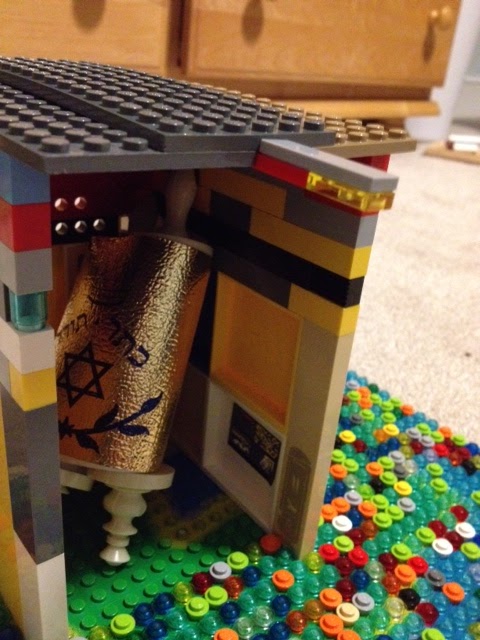
On Sunday, October 7, Noah Gorden (TBS member and 1st grade student at the Rashi School) was Consecrated along with 80 other young learners at our Erev Simchat Torah and Consecration service. Consecration literally means to set apart as holy; to dedicate and to cause to be revered or honored. 

During the Erev Simchat Torah service we sing and dance, carry flags and march around the synagogue in honor of the Torah, our most precious possession.  The joyous celebration provides the perfect opportunity to consecrate our children, our most precious gift.  TBS and the Gorden Family were celebrating Noah's Jewish learning journey at the Rashi School. 


Our Consecration ceremony affirms and celebrates the Jewish learning journey that our children have embarked upon. On Sunday evening, each Consecrant received a certificate of Consecration, a honey stick (so that Torah may always be sweet), a $250 gift certificate to be used towards tuition at Eisner or Crane Lake Camp, and a mini Torah. Noah, like many of our Consecrants was very excited to receive his mini Torah.


As soon as Noah got home he began building an Aron Kodesh or ark for his Consecration Torah. We were so moved by his process that we asked Noah to share his thoughts behind building an ark for his Torah with you.

Noah's words: 

I am Noah and I built an ark for my baby Torah and it is very special to me. I got this idea by thinking about my Torah. My mom gave me an idea for the sides of my ark and it came out looking like a mosaic. I added the ladder because I think it is cool. Lego guys can use the ladder to get to the top. At the end I added my eternal light. My Torah is special to me because I really have been counting down the days to me getting my baby Torah. It is special because I am Jewish and the Torah belongs to the Jewish people. The end. Thank you for reading my story.


 Thank you to the Gorden Family for sharing Noah’s mini-Torah story with us.


Monday, October 1, 2012

Moses' Circumcision

Question:
Was Moses circumcised as a baby before or after he was found by the Egyptian princess or at any time during his life?

Answer:
There is no clear reference to Moses’ circumcision in the Bible. We do not know when or even if he were circumcised at all. It is possible that he may have been circumcised by the Egyptians, because circumcision was practiced in ancient Egypt. But there is no mention of it anywhere.

There is only one biblical story that involves Moses and circumcision in Ex. 4: 24-26, but the text is corrupt.  We are told that Zipporah, Moses’ wife, carried out the act of circumcision on a family member on their way down to Egypt, but the text does not clearly state who was circumcised, Moses or one of their two sons, Gershom or Eliezer.

The text reads as follows (my remarks are highlighted): “At a night encampment on the way, the Lord encountered him [who is “him”? Moses or his son], and sought to kill him [Moses or his son?]. So Zipporah took a flint and cut off her son’s foreskin, and touched his legs [whose leg? Moses or the son’s] with it, saying, ‘You are truly a bridegroom of blood to me.’ And when He let him [Moses or the son?] alone, she added,’ A bridegroom of blood because of the circumcision” (NJPS).

Given the uncertainty of the text, commentators have suggested various interpretations.

According to some Rabbis, Moses was among those few grandees of the past who were born already circumcised (e.g., Tanhuma, Noah 5; Avot de Rabbi Natan 2: 5) as an expression of human perfection. For them, the question was who was then circumcised in the Exodus text? Some Rabbis maintained that God wanted to kill Moses because he had not circumcised his second son Eliezer (Ex. Rabba 5: 8; cf. Rashi). On the other hand, a talmudic Rabbi argued that the victim was not Moses but “the child”, but the Talmud does not identify whether this “child” was Gershom or Eliezer. One Rabbi opined that Moses was punished because he was apathetic towards circumcision; another one denies it (e.g., Ned. 31b and 32a).

Modern scholars, too, are divided: Some maintain that the victim was Gershom (Fohrer), whereas others say it was Moses (Childs). The text is so corrupted that one modern critic writes that “the account here is only a truncated version of a larger, popular story that circulated orally in Israel” (Sarna).

Even though the text is unclear, it becomes evident that the passage in Exodus highlights the importance and necessity of circumcision. Zipporah, facing a deadly threat, circumcised a member of her family, and saved him.

Rabbi Rifat Sonsino, Ph.D.
Aug. 2012


Sunday, September 30, 2012

Now Batting for the Miami Marlins...

I love good news!  Hopefully  by now, many of you have followed the story I first published here right before Rosh Hashanah about baseball player Adam Greenberg and now exactly two weeks later I have some good news to report.  As you may recall Adam Greenberg was a rookie in the major leagues back in 2005.  At his very first at bat, and on his very first pitch he was struck in the head with the pitch and hasn't played in the majors since then.  A determined soul, he got back into the batting cage and has rehabilitated himself in such a way that he's probably in better shape now than he was then.  Due to a technicality, his plate appearance in 2005 was never recorded as an at bat and thus a grassroots campaign was begun on his behalf to give him one official at bat.  Just the other day, the Miami Marlins granted Adam this opportunity and on Tuesday night, Adam will have an at bat as the Marlins face the Mets.  You can watch the game here online for free at the MLB site!http://mlb.mlb.com/mediacenter/#date=10/2/2012

So Rabbi Lenke, what's your fascination with this story?  Is it Jewish?  Is he?  Yes and yes.
Adam Greenberg was raised at Temple Beth Tikvah in Madison, CT.  But that's not all.  
On one hand this is a great story about second chances, faith, hope and desire, and yet on the other hand it is a great example of teshuvah.  Why teshuvah?  When Greenberg was wearing that Cubs uniform on that memorable day, Chicago was facing the Marlins, and now it is the Marlins who are giving Greenberg the moment he has dreamed of his entire life.  So stay tuned.  There are happy endings.  Sometimes where you least expect to find them.


Sunday, September 16, 2012

Batter Up!

Shanah Tovah! Tonight, with Jews all around the world we will usher in another new year. What do we hope 5773 will bring? Each new year brings the possibility of fresh starts, new beginnings and second chances and while I think most often we focus these changes on ourselves more than we do on others,I think that is often the intent. This is a time of introspection.  This year however, I would like to share with you an opportunity to do something for another person, a fellow Jew, and this very well might be the easiest thing you've ever done. It costs nothing and the rewards for him will be like the MasterCard commercial...priceless.

I recently read a story about Adam Greenberg, and I've been fascinated by his story.On July 9, 2005, Adam Greenberg made it to the big leagues.  He was on the roster of the Chicago Cubs, and like Cub fans believed in the potential of the Cubs. In the ninth inning facing the Florida Marlins, Greenberg was called to pinch hit by Cubs' Manager Dusty Baker. It would be the first and only time he stepped up to the plate in the major leagues.

On the very first pitch, Greenberg was struck in the back of his head with a 92 mile an hour fastball. This resulted in a major concussion, and a devastating and immediate end to his dream as a major leaguer. According to the rules of Major League Baseball,because he was hit by the pitch, there is no record of Adam Greenberg getting an official at bat in the bigs, but only a plate appearance.

Over the past 7 years, Adam has been recuperating, has never given up and remains as focused as ever to return the plate at least one more time, and this is where you, your friends and family members come in. Thanks to self described "longtime baseball fanatic" named Matt Liston, we all can help Adam achieve his goal. He created a website called www.OneAtBat.com and with enough signatures on this petition it is believed that the Chicago Cubs would give Greenberg his official one at bat at the end of their final home stand this season.

Time is of the essence here. For many of us baseball has left a sour taste in our mouths this year. Let's change that! If there were ever a time for second chances, the High Holy Days provide that time.

So please, visit the website. www.OneAtBat.com and watch the moving video, but more importantly sign on and encourage others to do the same.

Let's give Adam Greenberg his second chance!