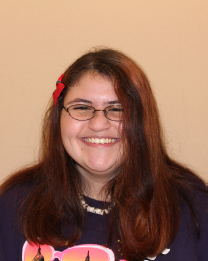
An important part of growing up and becoming a self aware individual is feeling a sense of belonging and having a community to fall back on. Throughout my younger years I yearned to be included in a group that would welcome me and allow me to thrive. I did not realize that I was already a member of a special community until I extended my time here at TBS. This temple community that I am a part of is truly something to marvel at. How 20 plus teens are able to get along extremely well and feel as close as we all do is a great feat. These healthy relationships did not come to be overnight. It took time spent laughing at kallot, discovering New York, engaging in discussions during class time, and exploring issues in Washington DC. No matter the time or place our temple community has been growing and changing for the better, and I am so glad that I have been able to be a part of it.
I remember stepping off the bus at the first kallah in 8th grade not knowing what to expect. I was not particularly close with any one group of people and was afraid that I would be unable to find my place within the group. What I found though, was that I didn’t need to worry. After that first kallah I realized what a great group of friends I had at the temple. I was able to be myself around these kids and I did not have to worry that they would make harsh judgments or criticism. After spending the weekend with the temple, it assured me that I would be able to create long lasting relationships. I also felt a growing sense that I was entering into a strong community that I could fall back on. I feel as though the kallot enabled us all to step away from the identities we encompass at school and really be ourselves.
Both trips I attended brought us closer as a community too. The New York trip allowed us to step out of our comfort zones. Being in a different environment helped strengthen the relationships we each held with each other as we got to see the other group members in a different light. Sharing new experiences with each other and creating unforgettable memories was a bonding experience that I know I will not forget. Learning about our culture together brought a sense of community as we all shared common ways of life. Being in such a gigantic setting, with a small group of friends also made me feel closer with the group. And on the next trip to Washington DC, I feel that the community was well established and that I truly was a member of it. As we merged and mingled with the other Jewish kids at the Religious Action Center, we all knew that at the end of the day we would come together again. By this point in time we were a strong community capable of opening up to others but always knowing that if we needed each other we would be there. The difficulty process of preparing our lobbying statements was yet another experience that allowed us to work together. Being together as a group this year in DC showed me how strong of a relationship I have with the other teens. I felt completely comfortable having conversations with anyone and even unleashing my awkward tendencies on the group without a self conscious care.
The final component to what really brought us together as a community this year was the time we spent together in class. Talking about thought provoking subjects enabled us to get a sense of each others’ morals and beliefs. Discussing substantive issues is not usually an adolescent activity, so these discussions reflected the introspective thoughts we all harbor. Class time was also spent, in part, on catching up with each other, which is so important in maintaining close friendships. I am so glad and honored to be a part of an ever growing and close community. I feel lucky to be able to be a part of a group where I can be myself and am constantly allowed to grow closer to my friends. I can only hope that this community stays as close and comfortable in the years ahead.
Tuesday, May 28, 2013
Jess Sickles' Sinai Statement
Labels:
Sinai Statement
Friday, May 24, 2013
Rachel Novick's Sinai Statement
We are all part of a Reform Jewish temple and to me it is important to stay connected throughout our lives to G-d. G-d to me is an essence that resides within each and every living thing on this planet called Earth. There was a story someone told me, about a block of holiness that the angels didn’t know where to hide. They tried hiding the holiness in the trees, underwater, in caves, underground, in the mountains, and in the sky, but they knew that one day humans would find a way to get to it. So the angels decided to break up the holiness into little shards, and put each shard inside a human being. This way, humans cannot find the holiness without discovering who they are, and with this holiness, we can make a difference. We must protect and care for the Earth in order to sustain ourselves for a long time, or else we’ll burn out in the end. Within the Torah in the book of Genesis it says, “The human being was placed in the Garden of Eden to till it and to tend it.” (2:15) As a Jew this emphasizes our responsibility to protect the integrity of the environment so that its diverse species, including humans, can thrive. Jewish tradition teaches us that human domain over nature does not include a license to abuse the environment. The Talmudic concept ba’al taschchit, “do not destroy,” was developed by rabbis into a universal doctrine that asserted G-d’s ownership of the land. Climate and energy policy must also be equitable and just, as the Torah commands, “Justice, justice shall you pursue” (Deuteronomy 16:20). Getting the world population to use renewable energy is one of the ways we can help to protect the environment.
I went on the Washington, D.C. trip to Religious Action Center with TBS. While I was there I learned a lot about the environment and how to make it better. I learned about climate control and how humans change the climate by using fossil fuels. We also learned about a very harmful process called Hydraulic Fracturing (Fracking for short). Fracking is the process of forcing open fissures in subterranean rocks by introducing liquid at high pressure, especially to extract oil or gas. As of 2010, it was estimated that 60% of all new oil and gas wells worldwide were being hydraulically fractured.
Proponents of hydraulic fracturing point to the economic benefits from vast amounts of formerly inaccessible hydrocarbons that the process can extract. Unfortunately, there are potential environmental impacts, including contamination of groundwater, risks to air quality, the migration of gases and hydraulic fracturing chemicals to the surface, surface contamination from spills and flowback and the health effects of these. The relationship between well performance and treatment pressures was studied by Floyd Farris of Stanolind Oil and Gas Corporation. This study became a basis of the first hydraulic fracturing experiment, which was conducted in 1947 by Stanolind. On March 17, 1949, Halliburton, an Oil Well Cementing Company, performed the first two commercial hydraulic fracturing treatments in Stephens County, Oklahoma, and Archer County, Texas. Since then, hydraulic fracturing has been used to stimulate approximately a million oil and gas wells. The largest domestic natural gas drilling boom in history has swept across the United States. The Halliburton-developed drilling technology of fracking has unlocked a "Saudia Arabia of natural gas" just beneath us. But when filmmaker Josh Fox is asked to lease his land for drilling, he embarks on a cross-country odyssey uncovering a trail of secrets, lies and contamination. A recently drilled nearby Pennsylvania town reports that residents are able to light their drinking water on fire. This is just one of the many absurd and astonishing revelations of a new country called GASLAND. He interviewed some people in New York City, to ask them how they felt about the fact that although New York has an enviornment law protecting them now, the law may be changed. Approximately 8,336,697 people dwell and live in New York City as of 2012. All these people are drinking from the same water supply. As someone said in Gasland, people come to NY for the tap water. A waiter doesn’t give you the choice of bottled v.s tap water. Unfortunately, if the water supply is tainted from the chemicals, it will be much harder to split resources enough so all citizens can drink clean water. New York is situated on the Marcellus Shale, which makes it a valuable source to drill natural gas from. The Marcellus Shale goes through many other states, especially western states in the U.S. Now, most of my family lives in Ney York City. It’s important to me that my family lives in a safe enviornment, and if their drinking water, as well as the air they breath are infected in any way, I personally will not stand for that. Human activities are enhancing the natural greenhouse effect - thickening the walls of the greenhouse—causing significant consequences for the global climate. Since the Industrial Revolution atmospheric levels of carbon dioxide, or CO2 for short, have increased by more than 30%. Climate change causes droughts, floods, and increasingly severe natural disasters such as Superstorm Sandy. In its 2007 report, the UN international panel on climate change concluded that the evidence for climate change is “Unequivocal” and that human activity, primarily the CO2 omission that come from the burning of fossil fuels is “Very likely” (almost certainly) the cause. When the climate becomes warmer, and flooding occurs, the air becomes humid. People who live near water normally have resistance to diseases born from the water. When the diseases move inland with the floods and humidity. the people inland most likely will not have encountered these particular diseases before, and thus their bodies are not immune and will be unable to counter-attack the disease. Over the next hundred years climate change will displace, at the very least, tens of millions of people.
That’s why at the RAC I wrote a speech about renewable energy as well as urged people to reintroduce and sponsor the American Energy Production Act of 2011. Hydraulic fracturing for natural gas is one of the country's biggest environmental and public health challenges in history. The 2005 Energy Bill exempted a controversial drilling technique known as hydraulic fracturing from the Safe Drinking Water Act, which allowed the natural gas industry to unleash a massive 34-State drilling campaign. In these troubled times, Congress may not be popular with the American people, but the fact is that they are our hope for controlling the Climate chaos that, if left unchecked, will destroy our way of living.
I went on the Washington, D.C. trip to Religious Action Center with TBS. While I was there I learned a lot about the environment and how to make it better. I learned about climate control and how humans change the climate by using fossil fuels. We also learned about a very harmful process called Hydraulic Fracturing (Fracking for short). Fracking is the process of forcing open fissures in subterranean rocks by introducing liquid at high pressure, especially to extract oil or gas. As of 2010, it was estimated that 60% of all new oil and gas wells worldwide were being hydraulically fractured.
Proponents of hydraulic fracturing point to the economic benefits from vast amounts of formerly inaccessible hydrocarbons that the process can extract. Unfortunately, there are potential environmental impacts, including contamination of groundwater, risks to air quality, the migration of gases and hydraulic fracturing chemicals to the surface, surface contamination from spills and flowback and the health effects of these. The relationship between well performance and treatment pressures was studied by Floyd Farris of Stanolind Oil and Gas Corporation. This study became a basis of the first hydraulic fracturing experiment, which was conducted in 1947 by Stanolind. On March 17, 1949, Halliburton, an Oil Well Cementing Company, performed the first two commercial hydraulic fracturing treatments in Stephens County, Oklahoma, and Archer County, Texas. Since then, hydraulic fracturing has been used to stimulate approximately a million oil and gas wells. The largest domestic natural gas drilling boom in history has swept across the United States. The Halliburton-developed drilling technology of fracking has unlocked a "Saudia Arabia of natural gas" just beneath us. But when filmmaker Josh Fox is asked to lease his land for drilling, he embarks on a cross-country odyssey uncovering a trail of secrets, lies and contamination. A recently drilled nearby Pennsylvania town reports that residents are able to light their drinking water on fire. This is just one of the many absurd and astonishing revelations of a new country called GASLAND. He interviewed some people in New York City, to ask them how they felt about the fact that although New York has an enviornment law protecting them now, the law may be changed. Approximately 8,336,697 people dwell and live in New York City as of 2012. All these people are drinking from the same water supply. As someone said in Gasland, people come to NY for the tap water. A waiter doesn’t give you the choice of bottled v.s tap water. Unfortunately, if the water supply is tainted from the chemicals, it will be much harder to split resources enough so all citizens can drink clean water. New York is situated on the Marcellus Shale, which makes it a valuable source to drill natural gas from. The Marcellus Shale goes through many other states, especially western states in the U.S. Now, most of my family lives in Ney York City. It’s important to me that my family lives in a safe enviornment, and if their drinking water, as well as the air they breath are infected in any way, I personally will not stand for that. Human activities are enhancing the natural greenhouse effect - thickening the walls of the greenhouse—causing significant consequences for the global climate. Since the Industrial Revolution atmospheric levels of carbon dioxide, or CO2 for short, have increased by more than 30%. Climate change causes droughts, floods, and increasingly severe natural disasters such as Superstorm Sandy. In its 2007 report, the UN international panel on climate change concluded that the evidence for climate change is “Unequivocal” and that human activity, primarily the CO2 omission that come from the burning of fossil fuels is “Very likely” (almost certainly) the cause. When the climate becomes warmer, and flooding occurs, the air becomes humid. People who live near water normally have resistance to diseases born from the water. When the diseases move inland with the floods and humidity. the people inland most likely will not have encountered these particular diseases before, and thus their bodies are not immune and will be unable to counter-attack the disease. Over the next hundred years climate change will displace, at the very least, tens of millions of people.
That’s why at the RAC I wrote a speech about renewable energy as well as urged people to reintroduce and sponsor the American Energy Production Act of 2011. Hydraulic fracturing for natural gas is one of the country's biggest environmental and public health challenges in history. The 2005 Energy Bill exempted a controversial drilling technique known as hydraulic fracturing from the Safe Drinking Water Act, which allowed the natural gas industry to unleash a massive 34-State drilling campaign. In these troubled times, Congress may not be popular with the American people, but the fact is that they are our hope for controlling the Climate chaos that, if left unchecked, will destroy our way of living.
Labels:
Sinai Statement
Rabbi Sonsino: Writing an Introduction to Judaism
![]() |
| Rabbi Sonsino |
Writing an introduction comes with its own challenges as to what to include and what to exclude. You would expect that Judaism, as an ancient religion that is well known in the West, does not need another introduction but the fluidity of the literature and the constant changes in our life-style and religious beliefs make it necessary to update the material on a regular basis. My book attempts to meet that need.
In 1961 when I arrived in the United States as a rabbinic student from Turkey, it was much easier to identify who was an Orthodox Jew and who was a Conservative or a Reform Jew. Today, the line of demarcation is not so clear. Even though non-Orthodox movements, which now include the Reconstructionist, Humanist and Renewal, have their own religious platforms, they are general in nature and tend to be inclusive and therefore vague; they do not always reflect the practice in the field. In former years, I could attend a Reform rabbinic convention (CCAR), and know exactly what to expect liturgically and theologically. Today, it includes a mishmash of all types of religious practices and beliefs. More and more, it looks like a bigger divide is emerging in the Jewish world between the Orthodox and the rest of all the non-Orthodox Jewish movements. Modern Judaism discusses all of these religious movements. Most previous introductions assumed that the Ashkenazic religious practices determined the core of Judaism, and consequently contained hardly any reference to the rich Sephardic tradition. In my Modern Judaism, I tried to present both points of view on most contentious subjects, such as the various practices regarding what to eat and not to eat during Passover, whether flowers are permitted during funerals, and what is the pattern of naming a child after a living or a dead parent and many others.
In addition to religious practices, it is important to point out that in the realm of religious beliefs, even though we all believe in the existence of One and Unique God, Jewish thinkers have advocated various concepts of God as well as other major religious concepts (e.g., freedom of will, sin, salvation, the efficacy of prayer). Furthermore, we, in the liberal community, need to approach our Sacred Scriptures through critical eyes and not take them as infallible, which they are not. My book highlights these points.
It would have been advantageous to include other subjects in the book, such as, an extensive discussion of critical biblical passages, a more comprehensive analysis of Jewish medieval thought, a full evaluation of modern Jewish approaches to various ethical and medical ethics, but that would have been beyond the scope of an introduction, and I decided to leave them out. I hope my Modern Judaism will whet the appetite of the readers and will lead them to further studies in their chosen fields. I am only opening the door, and if I have been able to excite the curiosity of my readers, I will be happy.
Rifat Sonsino
May 2013
PS. If you wish to receive these blogs please sign up at rsonsino.blogspot.com
Labels:
Rabbi Sonsino
Thursday, May 23, 2013
Talia Shapiro's Sinai Statement
Throughout my years at TBS I have developed relationships with a variety of people in our temple community. When I was in fourth grade I joined the temple youth choir and sang at every family service at the beginning of each month. I learned songs in Hebrew and strengthened my bond with friends and other members of the temple community. These services were where I gained much of my Jewish education. After hearing the prayers so many times I started to pick them up and even though I sometimes chatted with friends I knew what was going on. Towards the end of the service, one of the rabbis would share a short story that involved Jewish morals. Listening to these stories were fun because they usually had some humor, but reflecting I realize it was the start of educating us about Jewish values. It also strengthened my value of celebrating Shabbat every week.I also have consistently enjoyed participating in the small activities in our temple community. I’ve helped the brotherhood set up the sukkah, talked with people at the blood drive, I used to come early to Hebrew school on Sunday mornings just to chat with Nate in the religious school office, and I always ask my dad about how things are going with the new building plans after a Mikdash committee meeting. Every time I come to temple I meet more and more people who introduce me to more and more connections, thoughts, ideas, and even secret light switches in the bathroom. These activities have helped me to create my own unique connection with the temple and what it means to me.
My bat mitzvah portion was the Holiness Code, another set of Jewish values from the book of Leviticus. Becoming a bat mitzvah made me realize that the temple started as a place I went to Hebrew school and sometimes services and over time I formed my own relationships and reasoning for what Temple Beth Shalom means to me. I gained all of my knowledge for my bat mitzvah from studying Torah in the community and from my Dad and his experiences. I waited a long time for my bat mitzvah, and it was even better than I expected. When my parents asked my brother and I if we had had fun at the party that night, we looked at each other and agreed that we had much more fun leading the service than we did doing anything else that weekend. The support and education that we received over the years was part of the reason that our service was so meaningful.
Confirmation class has been the formalization of what has been expressed to me through my time at temple. Only now have I realized what I’ve learned over the years and the role of the Ten Commandments in our temple community. The Ten Commandments don’t help shape me solely based on a simple reading of them, but rather because of how they are expressed in the values of our community. I have taken in others’ interpretations and made them my own by participating in our temple community. By celebrating Shabbat and studying Torah within the community, I have made the commandments and Judaism my own.
Labels:
Sinai Statement
Wednesday, May 22, 2013
Rogers Epstein's Sinai Statement
There’s a TV show called Touch, which is about human connections. At first the show can seem a little out there. For example, In the beginning of an episode the main character picks up a radio part for someone who dropped it. Later, the person uses the radio part to rescue an Italian astronaut's life. But the moral of the story is sound. We are all tied into each other’s lives whether we know it or not. So, it is important that we leave a positive impact. This is where the Torah comes in. Not coincidentally, the show is about a Jewish legend - the 36 righteous people, or Lamed Vavniks. These people contribute to the world by performing wholesome acts that impact others: essentially, they are protecting the Ten Commandments and all the good that the Torah stands for. By not letting the person lose their radio part, thou art not murdering the astronaut. Now, as far as I know, my murdering record is pretty clean. But how many times have we let something so simple in our world which is broken go unfixed? In Jewish tradition, everyone should act as a Lamed Vavnik since - as the legend has it - those who are cannot know they are. We should perform acts like planting a tree, that may not benefit us but could heavily impact others in the future. Perhaps a main purpose of the Torah is to establish a righteous world through many acts of kindness.
For me, the core tenet of Judaism is that it is important to utilize your energy to help others. By respecting thy mother and father, my family’s life is easier. By not pirating music, I can rest with a clear conscience. Though the small lies I no longer tell are as subtle as the pun in this Sinai Statement, I’m happy knowing the world is probably a better place. In Judaism, 18 means life. So, the 36 means two lives: our own and the others whose lives we have the potential to impact.
Labels:
Sinai Statement
Tuesday, May 21, 2013
Katrina Coffman's Sinai Statement
[The tenth grade students who became Confirmed on May 14, 2013 have spent a year immersed in the study of Torah,
and in particular, the Ten Commandments. Shavuot is a time when the Jewish people is asked to bring bikkurim, offerings of great meaning and value, to share with God and community. Our students have responded to this call. Each of our Confirmands has prepared a “Sinai Statement,” a reflection on the learning and experiences that have been part of their year together as a class. They were asked to consider one of a number of topics including: their relationship with God, Torah’s impact on their behavior towards other people, the role of Jewish community in their lives, or our tradition’s prophetic call for social justice in our world. We hope that you will take the time to read them, perhaps to learn from them, and to be inspired by the thoughtfulness and commitment of this class. We are very proud of them!]
If a practicing Jew were to be asked if they knew what the Ten Commandments are, I’m almost positive that person would laugh and say, “Of course”. The Ten Commandments seem to be one of the best known elements of the Jewish tradition: I mean, I’m pretty sure they were the first thing we learned in 2nd grade religious school. But, if the Ten Commandments are so basic and so significant, why - when twenty 10th graders gathered in a room at the beginning of the year - did we actually struggle with naming all ten? I think we didn’t completely remember them because we thought of them as almost outdated and irrelevant. Do we really need to be told to not murder or to not commit adultery? The commandments can feel kind of condescending, with “I Am Adonai Your God” telling us exactly what to believe from the very beginning to “Thou Shall Not Murder,” and “Thou Shall Not Steal,” things that surely, for the most part, we can be trusted to do without direct orders. But as the year went on, and we talked about how people can be killed with words and gossip or how pirating music is just as much theft as walking out of a store with an unpaid CD, I realized that the Ten Commandments do have a relevant place in our lives today. That’s not to say that one necessarily thinks of them all the time. To be honest, I probably didn’t actively think about them this year except in Confirmation class. But when I studied them in greater depth I realized that the commandments, even the ones that seem obvious, are actually good advice - and may not be as condescending or obvious as I originally thought. One should try not to lie or steal or gossip, but that’s easier said than done, and the fact that qualities that are thought of as a necessity in any good citizen are outlined in the basis of Judaism really show what kind of values our religion stands for. Even practices that I may never completely keep, like the rules of kosher and all the rules of Shabbat, are based on basic Jewish values like kindness to animals and the value of taking time to rest. And these values are what really makes the Ten Commandments and more importantly, Judaism as a whole, everlasting and relevant to whatever time period we’re in.
and in particular, the Ten Commandments. Shavuot is a time when the Jewish people is asked to bring bikkurim, offerings of great meaning and value, to share with God and community. Our students have responded to this call. Each of our Confirmands has prepared a “Sinai Statement,” a reflection on the learning and experiences that have been part of their year together as a class. They were asked to consider one of a number of topics including: their relationship with God, Torah’s impact on their behavior towards other people, the role of Jewish community in their lives, or our tradition’s prophetic call for social justice in our world. We hope that you will take the time to read them, perhaps to learn from them, and to be inspired by the thoughtfulness and commitment of this class. We are very proud of them!]
If a practicing Jew were to be asked if they knew what the Ten Commandments are, I’m almost positive that person would laugh and say, “Of course”. The Ten Commandments seem to be one of the best known elements of the Jewish tradition: I mean, I’m pretty sure they were the first thing we learned in 2nd grade religious school. But, if the Ten Commandments are so basic and so significant, why - when twenty 10th graders gathered in a room at the beginning of the year - did we actually struggle with naming all ten? I think we didn’t completely remember them because we thought of them as almost outdated and irrelevant. Do we really need to be told to not murder or to not commit adultery? The commandments can feel kind of condescending, with “I Am Adonai Your God” telling us exactly what to believe from the very beginning to “Thou Shall Not Murder,” and “Thou Shall Not Steal,” things that surely, for the most part, we can be trusted to do without direct orders. But as the year went on, and we talked about how people can be killed with words and gossip or how pirating music is just as much theft as walking out of a store with an unpaid CD, I realized that the Ten Commandments do have a relevant place in our lives today. That’s not to say that one necessarily thinks of them all the time. To be honest, I probably didn’t actively think about them this year except in Confirmation class. But when I studied them in greater depth I realized that the commandments, even the ones that seem obvious, are actually good advice - and may not be as condescending or obvious as I originally thought. One should try not to lie or steal or gossip, but that’s easier said than done, and the fact that qualities that are thought of as a necessity in any good citizen are outlined in the basis of Judaism really show what kind of values our religion stands for. Even practices that I may never completely keep, like the rules of kosher and all the rules of Shabbat, are based on basic Jewish values like kindness to animals and the value of taking time to rest. And these values are what really makes the Ten Commandments and more importantly, Judaism as a whole, everlasting and relevant to whatever time period we’re in.
Labels:
Sinai Statement
Monday, May 20, 2013
Rabbi Sonsino - The Evil Eye
![]() |
| Rabbi Sonsino |
This is obviously an old superstition found all over the world: an envious glance can bring harm to the person or object. How do you protect yourself against it? You get a blue eye amulet that mirrors back, and stops the harmful look, the so-called, “evil eye.”
In Hebrew, the evil eye is called ayin hara or en raah (in Yiddish it is “kayn aynhora”). According to the Rabbis, whereas a benevolent eye (“ayin tovah”) is praiseworthy, "an ayin hara, (an evil eye), the evil urge and hatred of another human being take one out of the world.” (Av. 2: 11). According to another, ninety nine people die of an evil eye, and only one through natural causes (BM 107b). You can protect yourself against this malicious curse, by repeating ever so often, beli ayin raah (“without the evil eye” [having power over you]). In a popular Jewish joke, a Jewish patriarch who was on the witness stand was asked by a District Attorney: “How old are you? He answered, “I am, kayn aynhora, eighty one.” Similarly, when counting people, you are expected to say, “Not one,” “Not two, “Not three” etc. in order to avoid the disastrous effects of the evil eye.
This meaning of “evil eye” represents an extension of what the original word for “eye” meant in biblical literature. Ayin, (pl. enayim), simply refers to the physical organ of sight. Whereas, a person with tov ayin (lit. good eye) is considered a “generous person” (Prov. 22: 9), one with ra ayin (lit. evil eye), is “miserly” (Prov. 28: 22). One can have eyne gavhut, a haughty look (Isa. 2: 11), or shah enayim (lit. “lowly eye”) “humility”(Job. 22: 29). Being consumed by an attitude described as raah enekha (lit. an eye set on ill will), simply meant being “mean” to another person (Deut. 15: 9). God’s eyes (eyne YHVH) are placed upon the land of Israel as a promise of protection (Deut. 11: 12). It is not at all clear what the Bible implies when it states that Leah, Jacob’s wife, had “weak eyes” (rakot). (Gen. 29: 17). Did she lack luster (Sarna), or did she have lovely, delicate eyes (Speiser)? The Hebrew word, ayin, (pl. ayanot), also means, “spring” (of water). Example: “An angel of the Lord found her [Hagar] by a spring of water (eyn ha-mayim)” (Gen. 16: 7). This may be an extension, maybe a figurative way of speaking of an “eye.” It is interesting to note that in Akkadian, inu(m) means both “eye” and “spring” or “source.”
The human eye is our window to the universe. What we see is a reflection of our personality and provides a frame of reference for our approach to life. Some see things in color; others consider the world a dark place. Those who find shadows everywhere use amulets and other defense paraphernalia against the corrosive impact of the evil eye. It is, however, better to have a positive attitude in life and face the world with optimism, courage and determination. In the long run, the talismans do not work.
Rifat Sonsino
Labels:
evil eye,
Rabbi Sonsino
Monday, April 22, 2013
Words from Rabbi Todd - Friday, April 19, 2013
![]() |
| Rabbi Todd Markley |
Acharei Mot – Kedoshim
Our 6-year-old, Mia, walked into the den this afternoon where I was working. “Daddy, since none of us have school today, can you come play with us?” “I can’t right now, sweetie. I need to prepare for services tonight. A lot has happened this week, and I want to speak with the people at temple about it all tonight.” Mia glanced at the TV on the other side of the room that was running the same looped video feed of police cruisers and beleaguered reporters stalling by re-sharing the same information over and over again. She turned back to me with a look of pity on her face. “Well, it looks like you only have bad things to talk about, so…” – then she shrugged her shoulders and walked out of the room. Thank you, Sweetie.
It has, indeed, been an awful week, made all the more numbing by the juxtaposition of such seemingly opposite emotions. A day of great pride and celebration was, without warning, turned into one of shock and terror. An event meant to celebrate strength and endurance forced us to confront our own mortality and vulnerability. Lives filled with promise and future cut tragically short with only memories left behind. A Patriot’s Day meant to celebrate our freedom now haunted by a stark reminder of the price we sometimes pay for committing to the laudable goal of extending freedom to all…those with good will and those with malevolent intentions.
In some respects, these contrasting experiences echo those lived by our brothers and sisters in Israel this week. For them, Monday was Yom Hazikaron – the day of remembrance for all who have given their lives defending the Jewish State. Tuesday, the very next day, was Yom Ha’atzma’ut - Israel’s Independence Day celebration filled with rejoicing. Memory and freedom. Mourning and celebration. Grief and joy. Life often asks us to hold onto both at once. The past several days have been a profound and unsettling reminder of that reality.
Fitting, perhaps, that our two Torah portions this week reflect this very theme. The first is entitled Acharei Mot – meaning “after the death,” referring to the untimely demise of Aaron’s two sons as they assumed their roles as priests in last week’s Torah reading. The second of this week’s portions is Kedoshim – The Holiness Code – Torah’s “Cliff Notes” on what it means to live a holy life imbued with goodness, sanctity, and respect for fellow humans and God. Acharei Mot…Kedoshim…after death can follow holiness. Sanctity can be found – even in the wake of loss and pain.
Can we really hold onto both realities simultaneously? Our Jewish tradition teaches that we can. Let me be clear…I do not understand Judaism to seek meaning in anguish. Pain is awful and is not one of life’s goals. Grief is not a desired path to redemption nor is suffering a preferred gateway to the Divine. The vicious attacks that occurred at Monday’s Boston Marathon should never have taken place, and their victims were undeserving of this torment. Our task is not to find God’s hand in the bombs and their makers – two men who gave way to an inclination to make evil manifest in our world. Rather, our task, having born witness to this wickedness, is to keep faith that the human drive towards good can and will overcome that evil, that light can and will cast out darkness, that justice can and will outweigh sin and transgression, and that love can and will conquer hate. Two men committed a horrible crime. In response, hundreds of thousands have reached out helping hands to others in need.
Acharei Mot – Kedoshim – even in the wake of death and loss there is holiness. There was holiness in the first responders – police, medics, and compassionate citizen-heroes - who ran towards the explosions rather than away from them to lend support to the injured. There was holiness in the resilience of the surgeons, and physicians, and nurses and medical staff who worked around the clock to tend to the wounds which often required two and three surgeries in as many days. There was holiness in the runners who completed their 26.2 mile race, and – rather than collapsing in understandable exhaustion – ran two more miles to the hospital to give blood for the injured. There was holiness in calls from our political leaders to refrain from vigilante justice before we knew the identity of the criminals – to temper our desire to lash back in violence and instead to heed the words of this week’s Torah portion that we should not “hate our kinsfolk in our hearts…nor shall we take vengeance or bear a grudge against them, rather, [we should] love our neighbors as ourselves.” There was holiness in our Needham interfaith community coming together at the Congregational Church last night – Jews, Christians, Ba’hai, Quakers, and Muslims – united in our commitment to stand side by side in comfort, support, and hope.
Acharei Mot – Kedoshim – After there is loss there can be holiness. We see that tonight as we come together to recite kaddish – a word rooted in “holiness” just like kedoshim – for those whose lives were lost. Even in our grief and our pain, we seek out the holy – reflections of God’s light and God’s goodness found in the faces, the tears, and the actions of our neighbors and loved ones.
My colleague, Rabbi Karyn Kedar, penned these words in the wake of Monday’s attack:
Suddenly,
in the light of day
darkness was revealed.
We are in shock. Stupefied. Angry. Sad.
God, If the heart of every living being is good,
and if the soul you have given us is pure,
how does evil appear?
Hear our prayer!
Help us to have faith when there is doubt.
Bring healing to those in pain.
Comfort us in our grief.
Give us courage in our confusion.
Grant us strength
to look straight into the darkness,
defiant and determined
to pursue peace and establish safety
in our fractured world.
Oseh shalom bimromav
You who makes peace in the high heavens
Help us find the ways to make peace here on earth.
And so we pray…
Wednesday, April 10, 2013
(Zechor) Remember by Nancy A. Golden
Nancy A. Golden is a member of Temple Aliyah and a Needham resident. She read the following poem at Yom HaShoah services on Sunday evening, April 7, 2013. The service was a community memorial, co-led by Cantor Gaston Bogomolni (Temple Aliyah), Cantor Marcie Jonas and Rabbi Jay Perlman.
Zechor - Remember
The days and deeds of all times past,
The hopes and dreams of what will be,
So what has been can last.
The essence of what we were
can thrive in what we do
To keep our memories alive
Each generation through.
In pogroms and ghettos to concentration camps
We prayed "G-d grant us another day or year"
We fought with faith, and blood, and tears
To keep traditions we hold dear.
What happens when Holocaust witnesses
Have had their final day?
Who will keep in perpetuity
The essence of dear lives snuffed away?
As we tell of our joys and sorrows,
Of accomplishments and strife,
"Zecher" remains the only link
That wills our people to survive.
With unbroken spirit, heavy hearts,
The shedding of our tears,
We, who live, are the messengers
Insuring future years.
"Zechor" - Remember
The days and deeds of all times past,
Is our responsibilitty
So six million memories will last!
Zechor - Remember
The days and deeds of all times past,
The hopes and dreams of what will be,
So what has been can last.
The essence of what we were
can thrive in what we do
To keep our memories alive
Each generation through.
In pogroms and ghettos to concentration camps
We prayed "G-d grant us another day or year"
We fought with faith, and blood, and tears
To keep traditions we hold dear.
What happens when Holocaust witnesses
Have had their final day?
Who will keep in perpetuity
The essence of dear lives snuffed away?
As we tell of our joys and sorrows,
Of accomplishments and strife,
"Zecher" remains the only link
That wills our people to survive.
With unbroken spirit, heavy hearts,
The shedding of our tears,
We, who live, are the messengers
Insuring future years.
"Zechor" - Remember
The days and deeds of all times past,
Is our responsibilitty
So six million memories will last!
Labels:
Holocaust,
Nancy A. Golden,
Poetry,
Zechor
Tuesday, March 26, 2013
Life After Retirement
![]() |
| Rabbi Sonsino |
When I was a congregational Rabbi at Temple Beth Shalom, Needham, MA where I spent 23 years at the head of a mid-size synagogue (c. 550 families), I was at the center of my temple’s cultural, spiritual and social life; I had a large office with a window, a “sacred spot” in the parking lot reserved for me alone, and secretaries and office personnel who carried out my directives. Things changed after my retirement. I teach at Boston College (BC) on a part-time basis. I write a blog once in a while. A few months ago I published a new book, an introduction to Judaism in Spanish (Vivir Como Judio), and am now in the process of finishing another one on the Ten Commandments. For the last eight years, my wife and I have been going to Barcelona, Spain for a short period of time in order to help out a small liberal congregation that cannot afford to pay a Rabbi. With all that, I still have some time to spend with my children and grandchildren.
Being a part-time faculty is, on the one hand, exhilarating but also a humbling experience. I have been teaching at BC for the last 12 years. In the past, I taught electives on Bible and various Judaica subjects. Now, because of budget cuts, I am teaching only two parallel courses on Comparative Religion (Judaism and Christianity). For the academic year 2013-14, I was promised just one. Most of my students are sharp, inquisitive, and do well. The administration is supportive of what I do and I have a few good friends on the faculty. Having retired from the congregational rabbinate in 2003, being a “professor” now is one of the main paths I have carved for myself as I seek purpose and meaning at this stage of my life. (For the record, I am 74).
However, as a part-time teacher, I am required to teach only what the full-time faculty does not want to teach. I am poorly paid, receive no benefits, have an inside office that I share with a colleague, and I, like any other employee of the College, have to pay for a parking spot wherever I can find one. But I have adjusted to this change, simply because I am able to do what I love best, namely, to teach, and seem to be good at it. Recently I had an unpleasant experience at BC that reminded me of my new status.
![]() |
| Boston College |
I teach on Mondays and Wednesdays in the afternoon. This past February, on a Monday morning, I arrived around 11.30 am and drove to the covered garage, looking for a parking spot. Could not find one. I went around and around to no avail. In desperation, I drove up to the roof where a number of cars were already parked, left my Nissan and walked to my office. After teaching my classes, I returned to the garage but noticed that a ticket was placed on the dashboard. Not a warning, mind you, but a whopping $75 traffic ticket! I could not believe it. I thought if BC wants the faculty to teach, the least it can do is to provide easy parking opportunities. Upset, I went to the police station and was told that according to a new rule, one needs to buy a special permit for that part of the garage. I did not know that. They suggested I appeal. The next day, I sent an email, claiming my ignorance of the new rule and promising not to do it again. I really felt devalued.
Good news: my appeal was granted today. Phew!
Rifat Sonsino, Ph.D. Rabbi Emeritus
March 2013
Labels:
Boston College,
Rabbi Sonsino,
retirement
Subscribe to:
Posts (Atom)