The Children's Center students are expert challah makers; many bake their own challah every Friday morning as part of their classroom Shabbat experience. This past Friday the four year olds in the Tel Aviv class were charged with an extra responsibility: making a challah for each of the 10th graders who would be confirmed on Shavuot on Saturday night. The four year olds love looking at the photos in the hallway featuring past years of confirmation students, and look forward to the day when it will be their turn for this special day. So the chance have an important role in this year's confirmation service was quite an honor. What a wonderful way to connect our youngest TBS students with some of our oldest. As you can see, the confirmands were delighted to receive this gift from the Children's Center students.
Thanks to Rabbi Todd for capturing the moment on video!

Sunday, May 27, 2012

Thursday, May 24, 2012
Our TBS Chavurah
The mail just came. Our wait was over finally. We matched! A month earlier I had completed a simple survey sent out by Temple Beth Shalom looking for those interested in joining a chavurah*. My husband, Jeff, and I had one young child and already knew many people in town but thought it would be a great opportunity to meet even more local families. We were setup with 3 other families with children around the same age. The mailing contained a packet of information including phone numbers and emails. I hopped on the computer right away to email our new friends and organize a “first date.” We decided to meet as couples only for a dessert and wine at one of our homes so we could really get to know each other without interruptions. It was amazing how well we all hit it off from the start.
Our chavurah tries to meet every other month and it could be in any combination; a couples dinner, last minute pizza party for the families, Ladies night out, pool parties and Sisterhood/ Brotherhood events. Our next outing is usually determined at the end of each get together. We rotate who takes the lead on organizing the event.
At the beginning of the 2nd year we added 2 new families who were interested in joining a chavurah. It appeared to me like a seamless transition even though the 3 original families had already been together a year. We are a big group at family events and they can be a little chaotic at times. We don’t stand on ceremony with anyone and all believe more the merrier. Paper plates, plastic silverware and take-in are totally acceptable.
My parents who are in the 60-70 year old demographic also decided to join a chavurah after hearing my success story. They had been temple members for over 20 years but were at the stage in their life where retirement had just set in and their social calendar was more open than usual. Theirs is an adult only group of 5 couples who attend Shabbat services, plays, museum exhibits and many other social events together. I know they have thoroughly enjoyed their group and always look forward to their next get together.
I was asked to write about my chavurah experience as the next enrollment will be this fall. I encourage you to consider this great opportunity to connect with other temple members. You can decide the time commitment that works for you and what you hope to get out of it. Remember it’s not always possible for everyone’s schedules to line up so if you miss one event, you’ll just make the next one. Jeff my kids and I are looking forward to the 3rd year with our extended temple family. (For more information about the chavurah program, contact Jenny Small, Co-Chair of Member Relations, 781-559-3153 or jennylee27@gmail.com.)
Lauren Greenstein
*The word chavurah means a group of friends. In this program, people that sign up are matched to other families/couples from the temple to spend time with, either at temple programs or outside of the temple. It's a way to make the community smaller and more friendly.

Our chavurah tries to meet every other month and it could be in any combination; a couples dinner, last minute pizza party for the families, Ladies night out, pool parties and Sisterhood/ Brotherhood events. Our next outing is usually determined at the end of each get together. We rotate who takes the lead on organizing the event.
At the beginning of the 2nd year we added 2 new families who were interested in joining a chavurah. It appeared to me like a seamless transition even though the 3 original families had already been together a year. We are a big group at family events and they can be a little chaotic at times. We don’t stand on ceremony with anyone and all believe more the merrier. Paper plates, plastic silverware and take-in are totally acceptable.
My parents who are in the 60-70 year old demographic also decided to join a chavurah after hearing my success story. They had been temple members for over 20 years but were at the stage in their life where retirement had just set in and their social calendar was more open than usual. Theirs is an adult only group of 5 couples who attend Shabbat services, plays, museum exhibits and many other social events together. I know they have thoroughly enjoyed their group and always look forward to their next get together.
I was asked to write about my chavurah experience as the next enrollment will be this fall. I encourage you to consider this great opportunity to connect with other temple members. You can decide the time commitment that works for you and what you hope to get out of it. Remember it’s not always possible for everyone’s schedules to line up so if you miss one event, you’ll just make the next one. Jeff my kids and I are looking forward to the 3rd year with our extended temple family. (For more information about the chavurah program, contact Jenny Small, Co-Chair of Member Relations, 781-559-3153 or jennylee27@gmail.com.)
Lauren Greenstein
*The word chavurah means a group of friends. In this program, people that sign up are matched to other families/couples from the temple to spend time with, either at temple programs or outside of the temple. It's a way to make the community smaller and more friendly.

Lynne Dockser Cornell, Lauren Greenstein, Dana Lewis, and Tricia Sherman at Taste of the Town May 2012
Wednesday, May 23, 2012
A Shavuot Flower Walk

And he carved all the walls of the house round about with carved figures of cherubim and palm-trees and open flowers, within and without. (1 Kings 6:29)
On Shavuot there is a custom to decorate the insides of our synagogues and homes with beautiful flowers. Shavuot is also a wonderful opportunity to enjoy some time in nature.
But he himself went a day's journey into the wilderness, and came and sat down under a broom-tree. (1 Kings 19:14)
Go on a walk in a park or area of conservation land, or find a place that sells flowers or fruits grown locally. See how many different colors you can find, and how many of the seven species are available to pick or buy (Deuteronomy 8:8 enumerates these: "A land of wheat and barley and vines and fig and pomegranates a land of olive oil and [date] honey").
The desert shall rejoice and blossom; like the crocus it shall blossom abundantly, and rejoice with joy and singing. (Isaiah 35:1-2)
Go for a walk around the neighborhood or in the woods! Collect wildflowers and other colorful flowers and fruit to make a centerpiece for your holiday meal, or take pictures of fruits and flowers and create a special Shavuot collage. You may wish to write (in English or Hebrew) one of the biblical quotations above on a large piece of paper, and then decorate the border with wildflowers, leaves, or juice from deep colored berries.
More family Shavuot ideas at My Jewish Learning.
Saturday, March 31, 2012
Family Activities for Passover
 Involving
your whole family in the preparations for Passover will help create
memories and build Jewish life skills. Finding jobs and tasks that are
age appropriate for family members will allow them to successfully
participate in and contribute to the Seder and holiday preparations.
Publicly acknowledging the contributions of each family member helps
develop confidence and self-esteem.
Involving
your whole family in the preparations for Passover will help create
memories and build Jewish life skills. Finding jobs and tasks that are
age appropriate for family members will allow them to successfully
participate in and contribute to the Seder and holiday preparations.
Publicly acknowledging the contributions of each family member helps
develop confidence and self-esteem.10 Ways to Involve Your Family in Passover Preparations
1. Cleaning the house and getting rid of the chametz (leavened products)
2. Finding special Passover recipes
3. Writing the shopping list
4. Preparing the food for the Seder or the Seder plate
5. Setting the table
6. Making decorative place cards
7. Learning the Four Questions in Hebrew and/or English
8. Hiding the Afikoman
9. Finding the Afikoman
10. Sharing in the reading and discussion of the Haggadah before, during and after the Seder
From the Jewish Parent Page of the Union for Reform Judaism
Wednesday, March 21, 2012
Adult Purim Shpiel draws nearly 200 guests
On March 10, nearly 200 members of the TBS community attended the Adult Purim Shpiel in Simon Hall. We enjoyed a fantastic show, "Let it Be Purim," featuring members of the TBS staff, lay leaders, and band.

In addition, we raised $874 in contributions to Matanot L'Evyonim (gifts to the poor).
The Adult Purim Shpiel is just one event hosted each year by the TBS Member Relations committee. Our committee is looking to expand. If you are interested in helping to coordinate great temple-wide events, welcome new members, or cultivate prospective members, this committee is for you. Contact Jenny Small at jennylee27@gmail.com or Gregg Bierman at gregg_bierman@yahoo.com.
Monday, March 5, 2012
Record Attendance for 2012 Art in Bloom
 Record Attendance at 2012 Needham Art in Bloom!
Thank you to Roche Bros. for sponsoring our gift to Needham for showcasing Needham High School Student artwork with Beth Shalom Garden Club and other Needham Garden Clubs floral creations.
Our 4th annual exhibit surpassed previous years’ attendance. This year’s magnificent exhibit included over 50 pieces of exceptional artwork created by our Needham High School Art students creatively interpreted by floral designers.
See http://needhamartinbloom.com/ for exhibit photos.


Saturday, February 11, 2012
Garden Club Getting Ready for 2012 Needham Art in Bloom
Read all about the Beth Shalom Garden Club getting ready for the 2012 Needham Art in Bloom:


Tuesday, February 7, 2012
Elohim - One God or Many Gods?
This post originally appeared on Rabbi Sonsino's blog, “From Istanbul to Boston”
In Hebrew, for masculine singular nouns, plurality is indicated by the ending im. Thus, for example, yeled “boy” becomes yeladim “boys.”
The Bible uses many terms for God, such as El, Shaddai, YHVH, Elohim--they are all in the singular except for Elohim, which is in the plural. The question is this: how can God, conceived as being the only divinity in the universe—hence, monotheism- have a plural ending? Ancient Rabbis had to deal with this problem and said that the reason for the plural in Elohim is because of all the attributes (e.g. merciful, caring, loving) that are ascribed to one God. On the other hand, is it possible that the term Elohim is a vestige of polytheism in biblical Israel? I would say, yes.
To test whether or not the editors of the Bible considered Elohim a plural or a singular noun, we need to find whether the verbs attached to this name, are in the singular or in the plural. If they are in the plural, we would know that in the past Israelites believed that Elohim referred to many gods. If the verb is in the singular, then we would have to conclude that the term underwent a change, and a plural noun was now considered singular. We have an example of that in English, too. The word “media” is the plural of “medium.” Yet, we often say, “the media says,” not “the media say.” “Media” is now viewed as singular.
Let’s test the use of the word Elohim in the Bible: In the overwhelming cases, the word Elohim is accompanied by a singular verb. For example (see Hebrew title above): the Hebrew Bible begins with b’reshit bara elohim, “When God began to create…”-here the verb bara (“created”) is in the singular. That means the editor of this passage conceived of Elohim as one God. (For other examples, see, Gen. 1: 3; 22: 1; 25: 11; 50:24, and many others).
However, there are a few passages where Elohim is accompanied by a plural verb: when Abraham says to king Abimelekh, “When God (Elohim) made me wander…(hit’u) (Gen. 20: 13) ,” the verb “wander” is in the plural. Similarly, we read, “It was there that God (Elohim) revealed (niglu) himself to him [Jacob]” (Gen. 35: 7). Here, too, “revealed” is in the plural, implying the existence of many gods. (For other examples, see Ex. 22:8; Deut. 5:23; II Sam. 7: 23 and others). The medieval commentator Rashi was aware of this problem but tried to solve it by saying, “all references to godliness and authority are in the plural.” I would argue that these are vestiges of ancient polytheism that crept into the text.
There is no doubt in my mind that at some point in biblical times, Elohim was considered in polytheistic terms, “gods.” A good example is found in the Book of the Covenant, in one of the laws dealing with debt-slavery. According to a sub-section of this law, if the slave wishes to remain with his master for the rest of his life, because “he loves” him, then his master “shall take him before the gods (Elohim)” (Ex. 21: 5) and pierce his ear with an awl. Traditional Jewish commentators say that here the word Elohim means “judges.” So, the owner is taking his slave to the court. Some modern commentators believe that the reference is to the local sanctuary where the master presents his slave before God, perhaps, for an ordeal. For me, this texts simply means that the master brings his slave before the household gods, hence Elohim (see, for instance the reference to the household gods that Rachel had when she left her father’s house, the terafim, Gen.31: 34), and then pierces his ear at the doorpost of his own house with an awl.
This short analysis shows that biblical Israel went through a period of transition from polytheism to monolatry (“there are many gods but only one god for us”) and finally to monotheism (“there is only one God”). The process continued in medieval times into the modern. Old God concepts are not working any more. We need to search for the best explanation of what God means today in order to meet the needs of our own time.
(For details about God concepts in Judaism, see my book, Finding God (with Daniel Syme), NY: URJ Press, 2002, or, The Many Faces of God , NY:URJ, 2004, or , more recently, “What is God’s Real Name?” in my book, Did Moses Really Have Horns? NY: URJ Press, 2009, 12-24).
Rifat Sonsino
בְּרֵאשִׁית, בָּרָא אֱלֹהִים
 |
| Rabbi Rifat Sonsino |
The Bible uses many terms for God, such as El, Shaddai, YHVH, Elohim--they are all in the singular except for Elohim, which is in the plural. The question is this: how can God, conceived as being the only divinity in the universe—hence, monotheism- have a plural ending? Ancient Rabbis had to deal with this problem and said that the reason for the plural in Elohim is because of all the attributes (e.g. merciful, caring, loving) that are ascribed to one God. On the other hand, is it possible that the term Elohim is a vestige of polytheism in biblical Israel? I would say, yes.
To test whether or not the editors of the Bible considered Elohim a plural or a singular noun, we need to find whether the verbs attached to this name, are in the singular or in the plural. If they are in the plural, we would know that in the past Israelites believed that Elohim referred to many gods. If the verb is in the singular, then we would have to conclude that the term underwent a change, and a plural noun was now considered singular. We have an example of that in English, too. The word “media” is the plural of “medium.” Yet, we often say, “the media says,” not “the media say.” “Media” is now viewed as singular.
Let’s test the use of the word Elohim in the Bible: In the overwhelming cases, the word Elohim is accompanied by a singular verb. For example (see Hebrew title above): the Hebrew Bible begins with b’reshit bara elohim, “When God began to create…”-here the verb bara (“created”) is in the singular. That means the editor of this passage conceived of Elohim as one God. (For other examples, see, Gen. 1: 3; 22: 1; 25: 11; 50:24, and many others).
However, there are a few passages where Elohim is accompanied by a plural verb: when Abraham says to king Abimelekh, “When God (Elohim) made me wander…(hit’u) (Gen. 20: 13) ,” the verb “wander” is in the plural. Similarly, we read, “It was there that God (Elohim) revealed (niglu) himself to him [Jacob]” (Gen. 35: 7). Here, too, “revealed” is in the plural, implying the existence of many gods. (For other examples, see Ex. 22:8; Deut. 5:23; II Sam. 7: 23 and others). The medieval commentator Rashi was aware of this problem but tried to solve it by saying, “all references to godliness and authority are in the plural.” I would argue that these are vestiges of ancient polytheism that crept into the text.
There is no doubt in my mind that at some point in biblical times, Elohim was considered in polytheistic terms, “gods.” A good example is found in the Book of the Covenant, in one of the laws dealing with debt-slavery. According to a sub-section of this law, if the slave wishes to remain with his master for the rest of his life, because “he loves” him, then his master “shall take him before the gods (Elohim)” (Ex. 21: 5) and pierce his ear with an awl. Traditional Jewish commentators say that here the word Elohim means “judges.” So, the owner is taking his slave to the court. Some modern commentators believe that the reference is to the local sanctuary where the master presents his slave before God, perhaps, for an ordeal. For me, this texts simply means that the master brings his slave before the household gods, hence Elohim (see, for instance the reference to the household gods that Rachel had when she left her father’s house, the terafim, Gen.31: 34), and then pierces his ear at the doorpost of his own house with an awl.
This short analysis shows that biblical Israel went through a period of transition from polytheism to monolatry (“there are many gods but only one god for us”) and finally to monotheism (“there is only one God”). The process continued in medieval times into the modern. Old God concepts are not working any more. We need to search for the best explanation of what God means today in order to meet the needs of our own time.
(For details about God concepts in Judaism, see my book, Finding God (with Daniel Syme), NY: URJ Press, 2002, or, The Many Faces of God , NY:URJ, 2004, or , more recently, “What is God’s Real Name?” in my book, Did Moses Really Have Horns? NY: URJ Press, 2009, 12-24).
Rifat Sonsino
Friday, February 3, 2012
TBS Blacks Out Bullying
Last Wednesday, all I saw was black on T-shirts and sweaters, socks and slacks. Children attending our learning programs on Wednesday, January 26 donned black clothing as a symbol of their dedication to "black out bullying." This statewide initiative was a part of "No Name Calling Day."


"No Name Calling Day" was created in following up to a 2010 anti-bullying law. The state law was prompted by the death of Phoebe Prince, a South Hadley student who, law enforcement believe, took her own life as a result of bullying.
In our Elementary Learning program, our day began with an introduction to a variety of our sacred texts that help us understand how we should treat others.


Many classes focused their entire day of study on making people feel kindness and welcome in our community. Mrs. Kappel's 2nd grade student's were so inspired by the day that they made signs for the school, to remind their peers to always be kind to one another.

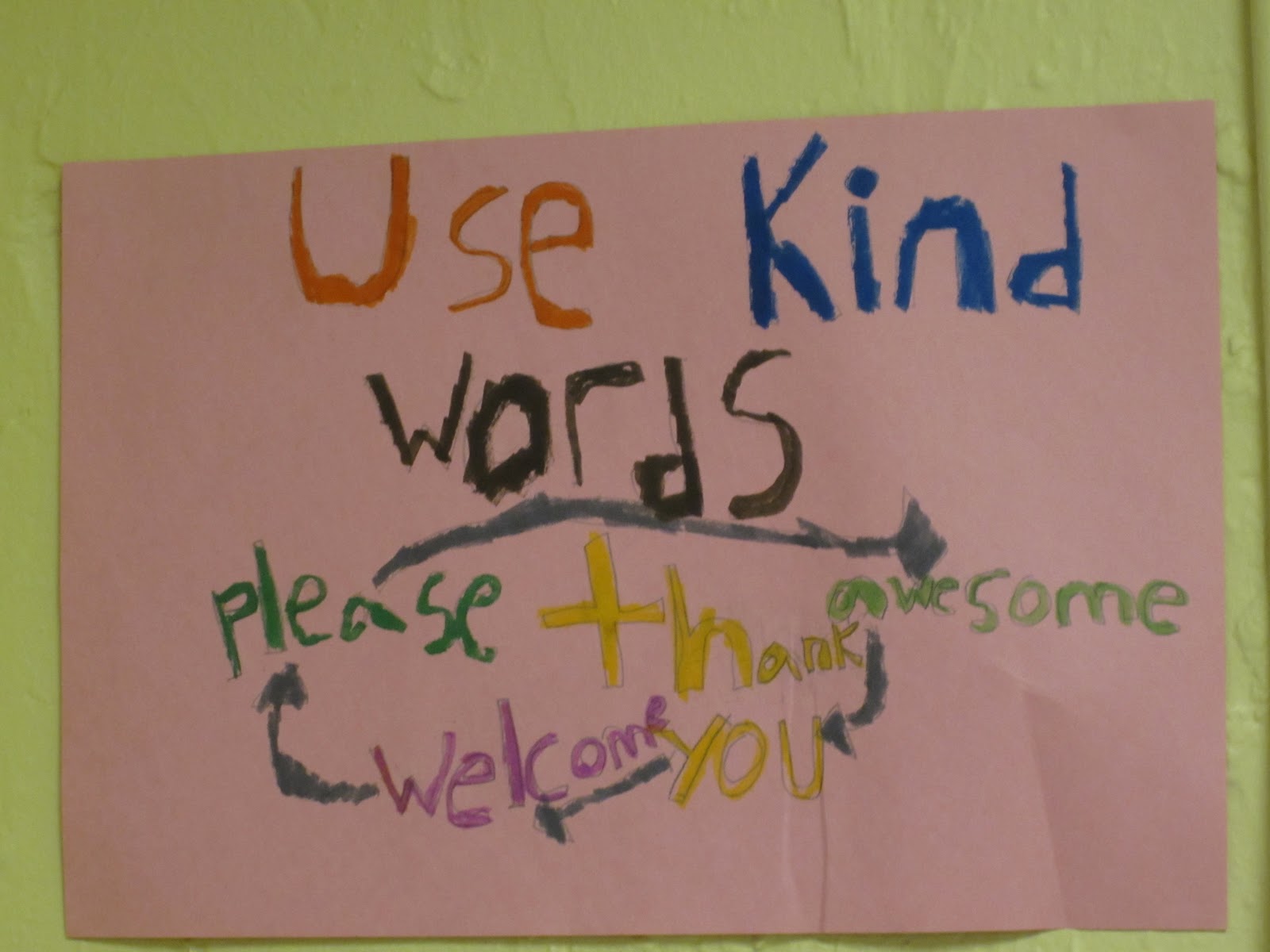
We closed our day together in community tefilah (prayer) with an emphasis on peace for everyone in our world.

It is a priority of our school community to ensure that everyone knows that they are welcome and to treat each other with kindness and respect. Together, we can ensure that bullying is never welcome in our community.
Thursday, February 2, 2012
Excercising our Minds & Bodies

The children of TBSCC are movers and moving! I have the privilege
of moving with all the Children's Center children. We have a chance to solidify some of the
learning concepts from the kinesthetic realm - we are having so much
moving fun! We "warm up" together - learning about our body parts and
all the many ways they can move from head to toe, recognizing all the
connections between the bones, muscles, and breathing; time, space and
force (fundamentals of dance and movement in its many forms). Each
participant has a chance to lead the group finding their own way of
moving across the room.
We have explored: lines, circles, balance, qualities of force: floating to strong pushing or pulling with strength (defying gravity), spacial: personal space and communal space, stretching and contracting, expanding and narrowing, focusing; and time: rhythmic drumming, fast - slow, impulsive - smooth. We took a journey to outer space and a magic carpet ride and experienced the individual uniqueness of a snowflake. The children exercise their bodies, their minds and their senses are stimulated and articulated, and then we recenter ourselves to adapt again to the classroom energy, space and pulse.
Next week will be TuB'Sh'vat and we will act out growing as in the Giving Tree. We are so blessed with such creative, imaginative, and developmentally exceptional children! I love how they work together enriching our experiences.
Nancy Kreiger aka Dancing Nancy
Subscribe to:
Posts (Atom)