Showing posts with label Passover. Show all posts

Tuesday, April 1, 2014

Eating Rice on Passover

Rabbi Sonsino
According to Jewish tradition, it is not permitted to eat fermented grain products (called hametz) during the entire Passover week. The Mishnah specifically mentions wheat (hittim), barley (seorim), spelt [also known as farro] (kusmin), rye (shifon) and oats (shibolet shual) (M. Pes. 2: 5). [Danby translates kusmin as “goat-grass”]. Ashkenazic Jews add to this list of prohibited food items rice, millet, corn, beans and other legumes (called kitniyot) in Hebrew. Most Sephardic Jews do not follow this custom and eat rice and other legumes during Passover.

What is the reason for this prohibition that emerged among Jews of Eastern European background?  Apparently, the custom originated in France in the 13th century and from there it spread to other Jewish communities in Europe. According to some sources, the reason is that these legumes resemble grain. Some point out that rice also “rises” when cooked in water. Others argue that some people could become confused and actually resort to making flour out of them.

In 1988, a prominent conservative Rabbi in Israel, David Golinkin, wrote a responsum on this subject and stated that the actual reason for this custom is unknown, and in fact contradicts an explicit statement in the Talmud (BT Pes. 114b). He also quoted another medieval Rabbi, Rabbi Yeruham, who called it “a foolish custom.” [See a longer article online by Jeffrey Spitzer, “Kitniyot, Not Quite Hametz” in My Jewish Learning].

Similarly, the CCAR, in its 1996 responsum on this subject, indicated that the early Reform Jews in Europe found this custom unnecessary and burdensome, and abolished it. It also stated that the “Reform practice, following the standard of the Talmud, permits the eating of rice and legumes during Passover,” but added that some observant Reform Jews may continue to follow the Ashkenazic tradition, if they wish.

I think it is time to eliminate this unnecessary burden on our congregants. As a Sephardic Jew, I will continue to eat rice and other legumes, without any sense of guilt.

Rabbi Rifat Sonsino, Ph.D.
April 2014.

Saturday, March 31, 2012

Family Activities for Passover

Involving your whole family in the preparations for Passover will help create memories and build Jewish life skills. Finding jobs and tasks that are age appropriate for family members will allow them to successfully participate in and contribute to the Seder and holiday preparations. Publicly acknowledging the contributions of each family member helps develop confidence and self-esteem.

10 Ways to Involve Your Family in Passover Preparations

1. Cleaning the house and getting rid of the chametz (leavened products)
2. Finding special Passover recipes
3. Writing the shopping list
4. Preparing the food for the Seder or the Seder plate
5. Setting the table
6. Making decorative place cards
7. Learning the Four Questions in Hebrew and/or English
8. Hiding the Afikoman
9. Finding the Afikoman
10. Sharing in the reading and discussion of the Haggadah before, during and after the Seder

From the Jewish Parent Page of the Union for Reform Judaism

Saturday, May 28, 2011

The First Commandment: A Personal Perspective by Rob Spiegel

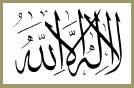
The image to the left is artistic rendering of the Arabic translation of the First Commandment.

Ed. Note: This is the first post in a series of ten which will be presented as a "count-up" to Shavuot. The text comes from TBS congregant Rob Spiegel who presented these words at a special congregational meeting celebrating the passage of our new By-Laws. Please join the conversation by adding your personal reflection of the 1st Commandment as a comment to this post. What does the 1st commandment mean today? Given the recent changes in Egypt, what does it mean to remember that we were "brought out of the land"? Where do you feel most at home?

I, Adonai your God, (am the one) who brought you out of the land of Egypt, from a slave house.


In performing this text study, we are looking forward to Shavout and the adoption of new bylaws for TBS. But, for a moment, allow me to look back to Pesach and ask how is this Commandment different from the other commandments. Are we being told by God to do something or refrain from doing something? Or, are we being told to believe? Is it possible for God to command belief?

Commentators differ, and we could discuss this point for hours, not the couple of minutes I have now. But, as we are reminded at Pesach, we were each individually and together as a community brought by God out of Egypt, out of a slave house. Consider the drama of the situation of the people actually there at the time. Having been slaves and having seen the plagues, hastily prepared to leave Egypt, crossing the sea into the desert, and watching Moses bring the tablets from Sinai, this commandment served to inform them, and continues to remind each of us and our community as a whole, who is responsible for freedom and who therefore has the authority to give the law.

When I was in college, I spent a semester abroad in Israel. Like so many, being in Israel was a deeply meaningful experience and I felt more connected to the Jewish people. During that semester I did a week-long side trip to Egypt. My feeling of connection to our people was even greater when I returned to Israel. When I returned, I felt at home, maybe more a part of our people than ever before or since in my life.

We here continue to be part of this community, and here at TBS we are a community within a larger Jewish Community. In accepting the nomination to serve on the Board of Trustees, I hope to continue to work to build community within the TBS community/communities.

-Rob Spiegel

Friday, May 27, 2011

The Ten Commandments and Shavuot: An Introductory Post by Rabbi Todd Markley

The image to the left is one of artist Keith Haring's version of the 10 Commandments. Comment with a link to your images of one or more of the 10 commandments for possible inclusion in a future entry.

Ed. Note: For the next 10 days as we approach the holy day of Shavuot, we will be sharing personal reflections from several members of the congregation on each of the 10 commandments. The congregants who will be sharing their words in the next 10 days are members of our nominated slate for the Board of Trustees for the 2011-2012 year. Each member was invited to share their D'Var Torah at our historic congregational meeting in which we passed the new TBS By-Laws.

We invite you to participate in this dialogue by offering your personal reflections on each of the commandments.


Dear Temple Family,

In just eleven short days, Shavuot, the second of the major "pilgrimage festivals" (those holidays when all of the people would flock to Jerusalem in ancient days), will be upon us. This cycle begins with Passover, the time of our people's going out from slavery and bondage in Egypt. Shavuot, celebrated seven weeks later, commemorates the next phase of our people's journey...the moment of God's revelation to the Israelites at Mount Sinai. In the fall, we will mark the third of these pilgrimage festivals, Sukkot, a season which invites us to leave the comfort of our homes and to live in temporary booths as our ancestors did on their travels from Mount Sinai to the Promised Land.

At Temple Beth Shalom, we mark this major milestone moment in the Jewish calendar by celebrating our Confirmation students on the eve of Shavuot, as they affirm their commitment to Torah, Jewish learning, and engagement with our community. In that way, they are, in fact, reliving that moment at Sinai when Torah was shared with our entire people, and we are so excited to hear them offer words of prayer, Torah, and song with us as we celebrate this festival. Please do join us for our Erev Shavuot Confirmation service on Tuesday, June 7th at 7:30 PM. This is the perfect way to mark this holiday season and to rejoice in the accomplishments of our extraordinary teens. If you are not able to be with us that night, do join us for our Shavuot morning minyan service at 7:00 AM on Wednesday, June 8th - our Yizkor service of remembrance will be read.

In his Guide for the Perplexed, the great Jewish teacher and scholar, Moses Maimonides reflected on the meaning of celebrating the giving of the commandments in the wilderness:

Shavuot is the anniversary of the revelation on Mount Sinai. In order to raise the importance of this day, we count the days that pass since the preceding festival, just as one who expects his most intimate friend on a certain day counts the days and even the hours. This is the reason why we count the days that pass since [Passover,] between the anniversary of our departure from Egypt and the anniversary of the giving of the law. The latter was the aim and object of the exodus from Egypt.


As the memories of family seder tables fade into the recesses of our minds, let us recall that the aim of the freedom we celebrated in April was the ability to live lives of sacred meaning and purpose, grounded in covenant with our people. We were freed so that we might be be bound not to taskmaster but rather to one another in shared practice, ritual, and pursuits as a group of people charged with bringing a little extra light to our world. May this Shabbat ahead, and the upcoming season of Shavuot, prove to be opportunities to do just that.

Michele, Mia, and Adam join me in wishing you a Memorial Day weekend filled with reverence for those whose memories we call to mind during these days, and a Shabbat that is set apart for its relaxation, its comfort, and its warmth.

Shabbat Shalom!

Todd