Showing posts with label Shavuot. Show all posts

Wednesday, May 23, 2012

A Shavuot Flower Walk


And he carved all the walls of the house round about with carved figures of cherubim and palm-trees and open flowers, within and without. (1 Kings 6:29)

On Shavuot there is a custom to decorate the insides of our synagogues and homes with beautiful flowers. Shavuot is also a wonderful opportunity to enjoy some time in nature.

But he himself went a day's journey into the wilderness, and came and sat down under a broom-tree. (1 Kings 19:14)

Go on a walk in a park or area of conservation land, or find a place that sells flowers or fruits grown locally. See how many different colors you can find, and how many of the seven species are available to pick or buy (Deuteronomy 8:8 enumerates these: "A land of wheat and barley and vines and fig and pomegranates a land of olive oil and [date] honey").

The desert shall rejoice and blossom; like the crocus it shall blossom abundantly, and rejoice with joy and singing. (Isaiah 35:1-2)

Go for a walk around the neighborhood or in the woods! Collect wildflowers and other colorful flowers and fruit to make a centerpiece for your holiday meal, or take pictures of fruits and flowers and create a special Shavuot collage. You may wish to write (in English or Hebrew) one of the biblical quotations above on a large piece of paper, and then decorate the border with wildflowers, leaves, or juice from deep colored berries.

More family Shavuot ideas at My Jewish Learning.

Wednesday, August 3, 2011

Sam Moller's Sinai Statement: Celebrating Confirmation and Tikkun Olam

Ed. Note: The third in our series of our Confirmand's Sinai Statements comes from Sam Moller. Sam talks about his views on Tikkun Olam and how his trip to the RAC during his confirmation year has helped shape these views.

Throughout my life I have always been drawn to perform Tikkun Olam, the Jewish principle of repairing our world through acts of social justice. Throughout my time at The Rashi School, I was under the impression that most of the people in our society were involved in social justice projects. After my trip to the Religious Action Center this winter my impression of Tikkun Olam completely changed. I realized from my trip to the RAC that very few people participate in social justice projects or have a clue about the injustices in our world. The trip also showed me that people should give back to their community and the people who have given to them. As Judaism says “Love thy neighbor as thyself”.

On the trip we covered many different social issues that have a great effect on this country, such as poverty, LGBT rights, America’s relationship with the State of Israel, family abuse, global warming and many more. By going into deeper learning around these topics I realized that there are more than one or two common views on these matters. There are hundreds. The phrase, “Two Jews, Three Opinions”, came into play on the trip countless times.

After I returned from our time at the Religious Action Center, I reflected on my experience and I realized that besides the friends that I made, I discovered a strong passion for the social justice projects that we worked on during the trip. I then came to the conclusion that I want to pursue a career in bringing greater justice to our world. Some people have come up to me since the trip and have asked what I want to be when I get older, and I have responded to them that I want to work in social justice. Some have said that, that it is very commendable, however the majority of the people have responded in saying that, my thought about my career is foolish because there is no money involved. Yes it is true that working in social justice is not a “get rich quick” occupation, however the enjoyment that I get from doing good is priceless.

--Sam Moller

Monday, June 13, 2011

Jacqueline Agranat's Sinai Statement: Celebrating Confirmation and TBS Teen Programs

Ed. Note: This second in our series of our Confirmand's Sinai Statements comes from Jacqueline Agranat. Jacqueline talks about her experience during this confirmation year, and shares her perspective on shalom.

Shalom everyone. This one word, “shalom,” has multiple meanings. The main three meanings are "hello, goodbye, and peace." In Hebrew, however, "shalom" is related to the word, "shleimut" which means "wholeness, health, and contentment." Being a part of this temple allows me to feel all the different parts that Shalom can offer. School cannot compete with the environment that this synagogue provides. In school we are taught facts, and forced to memorize them in order to do well on the upcoming test. In Confirmation, however, we are taught stories, lessons, and facts as well, but we do not need to memorize them for a test. We discuss these teachings and share what they mean to us. Each commandment from our Torah tradition impacts each individual differently. Confirmation class allows each of us to be our own person, rather than just another student in a class. We have come to understand that we are part of a larger tradition of adding our own voices to Torah, making it speak to our lives today.

As I was growing up, going to temple was a mandatory activity in my busy life. After everyone became Bar or Bat Mitzvah, in many families, it was the kid’s decision whether or not they should continue learning at temple. After observing how much my older brother Josh enjoyed his time here, I was willing to continue with it. Now I can see why he enjoyed it so much. This place, this beautiful synagogue, makes me feel secure. It wouldn’t be the same without the people that are here with me. Each member of the Confirmation Class of 2011 is a unique individual. It has been incredibly refreshing to spend time with the members of Confirmation and get to know them better. I know we all can relate when I say that the sharing circle before each class, during which we can check in about one another’s lives, is something we all enjoy. We are able to speak our minds and know that everyone’s support is present. Confirmation is one of the few places where I feel comfortable enough to really speak my mind without being judged, and I thank you all for allowing this shleimut, this wholeness, to be possible.

--Jacqueline Agranat

Thursday, June 9, 2011

Ben Grebber's Sinai Statement: Celebrating Confirmation and the Ten Commandments

Ed. Note: This past Tuesday night, our Confirmands shared their "Sinai Statements" with those of us who attended their Erev Shavuot service of Confirmation. Over the next several weeks, we will be sharing many of their statements. At the service, all 15 of the Confirmands read from the book of Exodus. The Torah scroll from which they read has special meaning. Read on to learn why.

When God passed the Torah down from Mount Sinai, it was given to Moses to share with the Jewish people. They, in turn, were now responsible to learn it, teach it, and pass it down through the generations. This created the strong heritage that we share today. After having a very special guest stay at our home, I now understand that heritage and what the Torah means to our people and to me.

During the Temple renovation some years back, my family kept a Torah from our sanctuary in our house for several months. We kept it free from dust and potential harm. We were a surrogate ark! At first, having the Torah in our house was cool but I was somewhat indifferent to it.

As the months went by, our new “house guest”, the Torah, took on a different meaning to me. The Torah became a member of our family as odd as that sounds. I passed it every day on my way to the kitchen. I checked on it to make sure that it was covered and protected.

The Torah was always a talking point when we had Jewish guests at the house. I realized that to a Jewish person, the Torah is immediately identifiable and even the least observant person seems to revere it as being something special, almost royal. I began to see the Torah as representing something greater than just a borrowed “thing” from our Temple.

After a few months of “Torah babysitting”, the Temple renovations were complete and the Torah had to be returned to its rightful place. My family was devastated. The Torah had become a part of our family, and it was sad to see it go.

The following Hanukah though, we were surprised yet again when my parents gave us a Torah of our own. Now we truly had a family Torah.

Once we put our new Torah in the infamous family room Torah Ark, I learned more about our Torah. I came to understand the Torah’s age, how fragile it is, and that it holds the Five Books of Moses. In my Holocaust class, I learned that many Torahs were destroyed by the Nazis and that some were actually secretly carried by my ancestors to America from places far away. For many of my ancestors, getting the Torah to a new and safe land was just as important as getting their families there. This was similar to the story of our Torah which came from Poland during the Holocaust.

Having our special Family Torah, I began to understand that when God instructed Moses to give the Torah to the Jewish people to pass its lessons and teachings down to future generations, God was instructing me to do the same. So I started asking questions about what stories the Torah contains. I took a greater interest in its teachings. Is this how the Jewish people felt at Mt. Sinai? Was it just an object given to them by Moses or did they see it as something more? Did they know that it would link future generations of Jews to them?

Even more important, over those months that the Temple’s Torah was in our house followed by the arrival of our Family Torah, I began to understand how the Torah links me to past generations. My Jewish ancestors learned the stories and teachings contained in the Torah just as I have throughout my religious school education. Through the strength and perseverance of the Jewish people, even in times of great hardship and war, the Torah is here today for me. I am a link in that chain of possession. My great-grandparents read from a Torah in Russia; my grandparents read from the Torah in America. My parents read from the Torah too – my father right here in this sanctuary. The Torah allows me to share that link in our heritage with all of them. It’s what binds us all together as Jews and as one family.

Just as Moses did on Mt. Sinai, we, too, will pass our family Torah from generation to generation. Like the Jewish people in Poland who read from our Torah years ago, I read from our sacred Torah when I became a Bar Mitzvah. My sister followed me by reading from it when she became Bat Mitzvah and my brother will follow our footsteps when he becomes a Bar Mitzvah. Like Moses, we will pass our family Torah from generation to generation, sharing the stories that go along with it, linking our future family generations with our current generation today. This is what keeps our history so strong. That is what identifies us as Jews and makes me who I am. I am proud that my Confirmation classmates and I will read from this sacred scroll tonight as we affirm our connections to Torah, to Temple Beth Shalom, and to one another.

--Ben Grebber

Tuesday, June 7, 2011

The Ten Commandments, Our New By-laws, and the holy day of Shavuot - by Beth Pinals

Image credit from Kolbo by artist Menachem Boas, "Fine art print. Image size is 21' x 31'. The culmination of the Exodus was the giving of the Ten Commandments. This exhilarating moment at Sinai is relived in this stunning piece, with Moses carrying the Tablets and the Leaders of the Tribes bowing in awe. The entire text of the The Book of Deuteronomy is here. This is Hebrew micrography in which all images are made with Hebrew letters. Call for pricing and availability if you would like a framed print. Also available in a limited edition.

Ed. Note: This "bonus" post in our Ten Commandment series is written by Beth Pinals, temple President. This new reflection on the Ten Commandments and how they relate to our new congregational By-laws is shared with you on the eve of Shavuot, the time in which we commemorate the giving of the law to Moses on Sinai. We invite you to join us tonight as we celebrate our Confirmands, and mark this special event. Services tonight start at 7:30 pm in our Sanctuary, and Shavuot morning services are tomorrow at 7:00 am (during which
Yizkor prayers will be read).

In Torah, the Ten Commandments are ‘brought to us’ in Exodus – the story of the Israelites’ journey to freedom. The preface to the revelation and receipt of the Decalogue is the affirmation of covenant between God and the people. Without the laws, Israel would not be Israel – the unique, sacred nation reaching back to “those who are not with us here this day” and enduring to a future beyond what we can know. This bridge across covenantal time is in fact, at the core of our TBS Mission and Vision. And the roadmap for the enacting our Vision are our new By-laws.

As Nathan Laufer observes in The Genesis of Leadership, the Ten Commandments “…conveyed the large, axiomatic, strategic values that were to guide the Israelites on their historic mission.” So too, do they offer wisdom and values reflected in our By-laws and in our new Vision for Governance:

  1. “I Am the Lord your God, who brought you out of the land of Egypt.” This blueprint, different than so many others in our daily lives, is sacred.

  2. “You shall have no other Gods before me.” In following the new guidelines for roles, decision-making and policy setting, we shall have faith that in this document we can find all of the answers and all of the right intentions.

  3. “You shall not take the name of the Lord your God in vain.” Our process will be in accordance with these By-laws and with the utmost respect for one another.

  4. “Remember the Sabbath Day, to keep it holy.” On Shabbat, we shall seek rest from the good work of the Synagogue in order to pause, gain a new perspective, celebrate what has been done, and be rejuvenated.

  5. “Honor your father and your mother.” Always keep in mind the foundations laid by those who came before us and acknowledge the ‘caretakers’, mentors, and ‘educators’ of our community. Take special notice of The Leadership Council, which will contain the voices of our sages.

  6. “You shall not kill.” We are responsible for the ‘life’ of our TBS Vision, as well as for our Vision for Governance and By-laws. We must keep them alive by keeping them close, utilizing and examining them.

  7. “You shall not commit adultery.” Honor the commitment to adhere to these By-laws, in large and small decisions, in matters that are complicated and sensitive, and in moments of doubt.

  8. “You shall not steal.” Each section of our By-laws is carefully crafted and self-explanatory. Certain concepts or articles may be designated as ‘borrowing’ from another. In addition, some policies are to be determined by the President or the Board at the start of a term. This clarity prevents the need to seek solution or ‘steal’ from elsewhere.

  9. “You shall not bear false witness against your neighbor.” As we heard in our special Meeting of the Congregation and again see in the past 10 days of TBS Blog postings, it is critical for our leaders and for all of our congregants to speak for themselves. Kavod is kept by allowing each person to own their behavior and communications.

  10. “You shall not covet.” In order to push away from envy or wishes to possess another’s circumstances, one must engage in t’shuvah – a return home and focusing inward at our own gifts and processes. We may always return to the internal blueprint or basic structure of our By-laws and Governance Vision as a reminder of the clear and sacred bed on which our community rests.


As the Israelites stood at Sinai open to the public receiving God’s disclosure, so too on May 4th 2011, did representatives of our Congregation witness the sharing of personal reflections on these Commandments, receive and explore the new ‘commandments’, and share the Shechechianu blessing as we officially embraced our new Governance Model, Vision and Bylaws. It is a moment to be remembered. L’dor v’dor… from generation to generation.

Monday, June 6, 2011

The Tenth Commandment: A Personal Reflection by Judy Ravech

Image credit, Cafe Press user Hebrew Art Ornaments

Ed. Note: Today we present this final post in the Ten Commandment Series. Written by Judy Ravech, today's post covers "coveting." This post looks at how we can turn our concern ABOUT others into concern FOR others.

As we finish our series, we invite you to join us tomorrow night for our Shavuot service celebrating our Confirmation Class of 2011. Services will begin at 7:30 pm in our Sanctuary.

Please also let us know whether you have enjoyed this expanded blog series. What future topics would you like to see on the blog? How often would you like to see posts on the blog? Would you like to be a contributing poster? Please feel free to comment on this or any topic on this post.


“You shall not covet your neighbor’s house. You shall not covet your neighbor’s wife, or his male or female slave, or..."


One of the most interesting things about the 10th commandment is that it’s the only one which instructs us on what we should or should not FEEL. The previous nine commandments are all about action, telling us what we should or should not DO. If we don’t observe the other commandments, it would be apparent to others that we’ve broken them; if we don’t observe this commandment, no one except ourselves, and G-d, will notice – unless we go from simply feeling desire for what our neighbor has to taking action. Perhaps the purpose of this last commandment is in fact to prevent that – because desiring what someone else has might eventually lead us to break one of the previous commandments – to steal, to commit adultery, perhaps even to commit murder.

But is it OK to covet something if we don’t act on it? We all have our moments when we envy what our neighbors have – their shiny new car or beautiful home, their happiness or good health, even their well-behaved children who, by the way, were just accepted to Harvard. But if we continually measure ourselves against our neighbors, how can we ever be satisfied with our own lives?

I don’t believe that desire is necessarily a bad thing – it’s what motivates us to study hard in school, to get up each day and go to work, to become productive members of society. But if I focus all my energy on the things I want to HAVE, I cannot be paying nearly enough attention to the things I want to BE. When we stop caring about what our neighbor has and trying to keep up, our hearts and souls become incredibly free. As an active participant here in the TBS community, I’ve been granted continual opportunities to move forward from caring about what my neighbor has, to caring about how my neighbor is – and as a current and future leader, to be in a position to take action and do something about it. This commandment – the last and only one which tells us how to feel – is perhaps really G-d’s way of directing us to “chesed” – and by caring about each other, we ultimately repair the world.


--Judy Ravech

Sunday, June 5, 2011

The Ninth Commandment: A Personal Reflection by Ina Glasberg

Image credit, Scientific American.

Ed. Note: Today's post is the ninth in our series on the ten commandments. As a reminder, each of these individual posts was presented at a special congregational meeting during which we passed our new by-laws. Each congregant who presented their personal view of one of the ten commandments is also a candidate for our newly constituted Board of Trustees.

Ina Glasberg spoke at the event and presented her personal reflection on the Ninth Commandment. The summary of her words follows.

As we approach the holiday of Shavuot which commemorates the giving of the Law to Moses, we invite you to join in the conversation by posting your own personal reflections to any of the posts on the commandments. Also please join us at 7:30 on Tuesday night for our Shavuot Service and Confirmation.


Do we realize that we may cause, consciously or unconsciously, injury with the words we speak or repeat? We must not sin in criticism of other people. If you answer or repeat what you do not know to be true -- you are a false witness.

--Ina Glasberg

Saturday, June 4, 2011

The Eighth Commandment: A Personal Reflection by Mindy Pasco-Anderson

Image credit is artfeeds.org, a program dedicated to inspiring children through art. Their slogan is "Love Naively. Give Generously. Be Foolishly Compassionate."

Ed. Note: With this eighth post in our series, we are heading into the home stretch as we approach the holiday of Shavuot. Today's post by Mindy Pasco-Anderson tackles the topic of stealing. Join us by adding your feedback to this or any of our posts so far.


This Commandment #8 is a bold, broad directive. What is it, you ask, that you should not steal? Anything that is not yours is my answer. Nothing material, nor a claim to good deeds done by others, another's time or energy, relationships, money, people, pets, ...the list goes on.

The commandment tells us in a very succinct and direct way what NOT to do...

But there’s another, more subtle implied message – something that the physical laws of nature tells us must be there – the complement to the commandment. There is, I believe an implied message of what TO DO. I would define the opposite of stealing as giving or sharing. So, to makes things right in the universe, I believe that we must find ways, big ways and small ways to give back. The HOW is not important, and is as customizable as the giver, their abilities and the perceived need. The WHY, however is unquestionable.

I like this kind of thinking. I like thinking that each and every positive thought and deed helps to keep the world in check. In fact, with so much current world negativity, I think that we all have to work harder to maintain the balance. So simple and yet so powerful.

So, you shall not steal – indeed, you shall be a contributor. Live your life with care and compassion.

--Mindy Pasco-Anderson

Friday, June 3, 2011

The Seventh Commandment: A Personal Reflection by Daniel Barkowitz

The image to the left comes from the web page for Jewish Marriage Encounter in Israel.

Ed. Note: This post, by Daniel Barkowitz, continues our series on the Ten Commandments. Credit is due to About.com's post for quotes about the Jewish Marriage Encounter philosophy of "Love is a Decision". For information on Jewish Marriage Encounter visit their web page.


Just as Faith is a decision, I believe that Love is a decision.

I remember sitting next to my wife, Rebekah, in (what was then) the Newton Sheraton Tara hotel, hanging over the Mass Pike. We were there for a Jewish Marriage Encounter Weekend, an event which promised to teach us how to better communicate with each other as a couple. We were still young in our marriage, what we referred to then as DINKS (Dual Income, No Kids) and we were excited to see what we could gain from a weekend focused on just our relationship with each other.

One of the more controversial statements made that weekend by one of the presenters is that "Love is a Decision." It was a statement that reminds couples to love the person, not the behavior.

Many people do not see why a person would have to make the decision to love since they made that decision many years ago when they said yes to one another on their wedding day. We were taught on the weekend that it is normal in married life to have periods of romance and disillusionment. This cycle is often repeated – sometimes over days, weeks, even months.

One way to break out of disillusionment is by deciding to love. Feelings change and aren't not easily controlled. Love is not only a feeling, it is more than a feeling. Love is a decision.

By saying that “Love is a decision”, I mean that I am committing myself to be open and to share when I don’t feel like it. By saying that “Love is a decision”, I am promising to make the decision to love even when I don't think my spouse deserves my love.

Saying that “Love is a decision” means that you are open to honest communication with your spouse. That's not only talking, but also listening. It is also a decision to be loved.

Making the decision to love includes the everyday, little things that you often do for one another, especially when you’re not feeling loving. From the action of deciding to love, often the feeling of love will follow.

This resonates in our Jewish tradition as well. Often the decision to do a good deed and the commitment to the mitzvot only happens after the mitzvah itself is completed. We are taught to pray with intention, but that the act of prayer itself will lead to the development of the intentionality of prayer.

--Daniel T. Barkowitz

Thursday, June 2, 2011

The Six Commandment: A Personal Reflection by Liv Nash

Image credit - Flickr user ANVRecife. Image title is "Killing Ideas II".

Ed. Note: What follows is our sixth blog post as a part of the 10 commandment series. We are counting up to Shavuot by sharing personal reflections from congregants on each one of the 10 commandments. Today's reflection comes from Liv Nash and gives an interesting and new view of the commandment not to murder. Please join our conversation by adding your thoughts and opinions to this or any post. What do you think of Liv's take on the commandment? What do you take from her point of view?


My interpretation of the 6th Commandment relies on a non-legal one. As noted in Broken Tablets, Rabbi Avraham Yitzhak Bloch of Telshe also suggests “that a concept of murder more subtle and comprehensive than standard legal definitions is intended.”

I look at the 6th Commandment as a direction to not suppress one’s beliefs, regardless of how they may or may not deviate from what the majority of people may or may not believe. As someone who grew up in a secular household, I didn’t think about religion or spirituality. I knew that I was Jewish and that we celebrated Passover and Hanukah, but I didn’t quite get what being Jewish meant. I know that I thought of it more as a religion than an act of being, which is how I interpret my Judaism today.

As my involvement in Temple Beth Shalom began to grow, I had conflicted feelings about my beliefs – did I believe in G-d or did I feel a connection to the spiritual aspects of Judaism that are so often discussed in our meetings. Even as I attended my adult B’nei Mitzvah classes, leading up to my becoming a Bat Mitzvah here at TBS, I almost felt a need to ignore my feelings toward the religious aspect of what I was doing as I felt very conflicted: again, did I believe in G-d or not and how was I going through this monumental step in my life without knowing. I was suppressing the need to “come clean” with my own interpretation of being a Jew.

Fortunately for me, the TBS community, its leaders and in particular the clergy, have made me realize that all that I was feeling and am still today, is OK. There isn’t a need to put aside the fact that my beliefs may not be consistent with so many. They are my beliefs and I shall not “murder” them.

--Liv Nash

Wednesday, June 1, 2011

The Fifth Commandment: A Personal Reflection by Bernice Sue Behar

The image we are using today comes from letlifein.com, a website "directed to the ‘after 50′ audience [where] the writers and editors ... don’t sugar-coat the 50+ years but reveal what boomers today, as individuals, are thinking, exploring and experiencing."

Ed. Note: Today's post comes from Bernice Sue Behar and speaks to the Fifth Commandment. Halfway through the series, we would like to ask for your feedback! Are you enjoying the series? What are you finding best about these posts? What would you like to see more or less of in future posts?


When I saw the note asking each of us to say a few words of reflection about one of the Ten Commandments, I didn’t hesitate about which I would choose. The words “thou shalt honor thy mother and thy father” are part of the conversation I have with myself every day.

I decided that the essence of this commandment relates to vulnerability. We usually interpret “honor” as somehow synonymous with respect, but I don’t think that respect can be commanded. Instead, I think that to show honor in a way that matters really means to attend to the needs of our parents as they become older and more vulnerable. As our parents age, they begin to lose capabilities, their life long companions, and often, their dignity. As Jews, we know that it is incumbent upon us to take care of those who are in need and I believe that honoring our parents falls into the same framework. As their children, we are ultimately the ones who are responsible for helping our parents and for bringing them comfort and the reassurance of love.

-Bernice Sue Behar

Tuesday, May 31, 2011

The Fourth Commandment: A Personal Reflection by Lori Shaer

The image to the left was inspired by the 10 principles from www.sabbathmanifesto.org. From their web page: "The Sabbath Manifesto was created by a group of Jewish artists in search of a modern way to observe a weekly day of rest. The group are all members of Reboot, a non-profit group designed to “reboot” the cultures, traditions and rituals of Jewish life."

Ed. Note: The blog post below gives a moving and inspiring reason behind finding a modern way to take in the power of the Sabbath even in our secular, busy lives. Lori Shaer's words come from our ten day experiment in counting up to Shavuot by sharing personal reflections on each of the ten commandments from members of the nominated slate for the TBS Board of Trustees. Please add your thoughts to this or any of our posts. Do you find a way to observe a moment of rest during the busy week? How do you balance the pace of modern life with the instruction to have a day of rest?


The fourth commandment says –

Remember the Sabbath Day and keep it holy.
Six days you shall labor
and do all of your work.
But the seventh day is a Sabbath of the Lord your G-d
you shall not do any work
you, your son or daughter, your male or female slave,
or your cattle, or the stranger who is within your settlements.
For in six days the Lord made
heaven and earth
and sea, and all that is in them,
and He rested on the Seventh day
therefore the Lord blessed
the Sabbath day and hallowed it.


Now I ask you, would anyone like a 48-hour day? Perhaps once a week? Maybe once a month? I know I sometimes would. I have often thought to myself, “Oh, if I just had a little more time to do this or a little more time to finish that." But we all know that our work is never completely done. Whether our work consists of taking care of children and a home, putting together business deals, doing medical research, creative writing, or teaching, our work is never completely done. True, a home can be clean, business deals can be signed, a new drug can be developed, a book can be published, and a teacher can witness a student graduating. But there is always laundry to do, new deals to be made, more diseases to cure, more words to share, and certainly more things to teach. Our work, therefore, is never really DONE.

Everything in our lives certainly cannot be measured in what we have done. Sometimes it is just as important to measure what we have not done and acknowledge that sometimes we just need that break or that rest.

In the book, Broken Tablets, Rachel Mikva quotes Rabbi Gunther Plaut’s teachings when he said, “We must understand that doing nothing, being silent and open to the world, letting things happen inside, can be as important as – and sometimes more important than – what we commonly call 'useful.'” The Sabbath is the ultimate statement that the world does not own us.

A great pianist, Artur Schnabel, was once asked by an ardent admirer: “How do you handle the notes as well as you do?” The artist answered: “The notes I handle no better than many pianists, but the pauses between the notes – ah! that is where the art resides.”

Rachel Mikva then says, “In great living, as in great music, the art may be in the pauses.” Surely one of the enduring contributions that Judaism made to the art of living was Shabbat, “the pause between the notes.”

In our home when we light Shabbat candles on Friday nights, and pause, our kitchen may be disorganized from a busy end of the week. One recent Shabbat while lighting candles our phone rang, but it was not answered. And whatever trinket of one our children may have in his or her hands, it is put aside for some family time and to welcome Shabbat. Our children have helped me become a better and more observant Jew and I have learned that even when everything isn’t done, it’s ok to pause, reflect, and have some sacred time for yourself and your family.

Some of life’s most important and treasured moments come when we are not working, when we pause, when we listen, and when we just watch, even if our work is not yet done.

The gift of the Sabbath allows us this sacred time.

-Lori Shaer

Monday, May 30, 2011

The Third Commandment: A Personal Reflection by Michael Bailit

Ed. Note: We now return to our series on the 10 Commandments with this post from TBS Congregant and Board of Trustees member Michael Bailit. Feel free to share your interpretation of this or any of our previously covered commandments on their blog posts and join in the conversation.

"You shall not take G-d's name in vain." This is a commandment that I have always taken so seriously. In fact, I avoid using curse words of any form. (My sons have reminded me that while they have never heard Daddy swear, they once did hear Mommy do so when she bumped her head.)

With time and reflection, this commandment has taken on greater meaning for me. In fact, I take away two different but both important meanings. First, I observe that relative to many of the "prohibition" commendmants, this one at first seems out of place. Murder, adultery, stealing...we can all agree that these are reprehensible behaviors. Yet this commandment is just about speaking words. We live in an age where we are besieged by words: spoken words on cell phones, radio, television and from friends, family, business acquaintances and strangers, and written words in books, online, on billboards, in newspapers and magazines. Words are ubiquitous and for that reason they seem to have become cheapened - "only words." This commandment, however, seems to say that words are important and that their common use does not diminish that importance. What we say to others and what we say to G-d does matter in our relationships and in the work that we do

Second, the commandment that we not take G-d's name in vain suggests that we should "take" G-d's name otherwise. I take this to mean that we should "take" G-d's name in another way and seek to have some form of a relationship with G-d. The relationship may be harmonious or difficult, one of belief or disbelief or back and forth between the two. What is important is the attempt to engage in a relationship.

These interpretations are more than those that I internalized many years ago when I resolved to be careful not to take G-d's name in vain and suggest the multiple layers of meaning available to us in the commandments.

--Michael Bailit

Sunday, May 29, 2011

The Second Commandment: A Personal Reflection by Daniel Barkowitz

The image to the left comes from youmademesayit.com. The image was chosen for its reference to the position of covering the eyes before saying the Shema, and also for its reference to the duality of faith - being willing to close your eyes and trust even while the world argues to keep your eyes open.

Ed. Note: This is the second in a series of ten posts in the days leading up to Shavuot. Each post explores one of the ten commandments. Today's post is written by TBS Executive Director, Daniel Barkowitz. Please feel free to add your response to this post to the comments section below. How do you experience faith and doubt? What does the second commandment mean to you? How do you interpret the commandment to have no other g-ds before G-d?


Have no other G-d before me.


I believe that faith is a Decision.

Making the decision to believe in G-d when the world argues against such faith and commitment is itself a decision. If I make the decision to have faith, even in moments where having faith is hard, then the decision to have faith will bring me the intention I need to follow through.

Faith is a decision to live your life in such a way as to find meaning in it beyond the material things that the world says you must possess. It is a decision to believe that there is more to life than meets the eye, and that life extends even beyond death. It is a decision to be able to have a rock to hold onto even when all around you is chaos, even when people declare in the streets that all is hopeless, and that all is lost.

Faith is a decision means knowing that not all questions have to have answers, and that sometimes the answers will come without their corresponding questions. Making the decision to have faith does NOT mean removing all doubt; in fact by making the decision to have faith I embrace the doubt I feel as a genuine part of my spiritual self.

G-d demands that we have no other g-d before YHVH. I respond that making the decision to have faith means that I place my trust in that Miraculous Power.

-Daniel T. Barkowitz

Saturday, May 28, 2011

The First Commandment: A Personal Perspective by Rob Spiegel

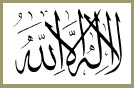
The image to the left is artistic rendering of the Arabic translation of the First Commandment.

Ed. Note: This is the first post in a series of ten which will be presented as a "count-up" to Shavuot. The text comes from TBS congregant Rob Spiegel who presented these words at a special congregational meeting celebrating the passage of our new By-Laws. Please join the conversation by adding your personal reflection of the 1st Commandment as a comment to this post. What does the 1st commandment mean today? Given the recent changes in Egypt, what does it mean to remember that we were "brought out of the land"? Where do you feel most at home?

I, Adonai your God, (am the one) who brought you out of the land of Egypt, from a slave house.


In performing this text study, we are looking forward to Shavout and the adoption of new bylaws for TBS. But, for a moment, allow me to look back to Pesach and ask how is this Commandment different from the other commandments. Are we being told by God to do something or refrain from doing something? Or, are we being told to believe? Is it possible for God to command belief?

Commentators differ, and we could discuss this point for hours, not the couple of minutes I have now. But, as we are reminded at Pesach, we were each individually and together as a community brought by God out of Egypt, out of a slave house. Consider the drama of the situation of the people actually there at the time. Having been slaves and having seen the plagues, hastily prepared to leave Egypt, crossing the sea into the desert, and watching Moses bring the tablets from Sinai, this commandment served to inform them, and continues to remind each of us and our community as a whole, who is responsible for freedom and who therefore has the authority to give the law.

When I was in college, I spent a semester abroad in Israel. Like so many, being in Israel was a deeply meaningful experience and I felt more connected to the Jewish people. During that semester I did a week-long side trip to Egypt. My feeling of connection to our people was even greater when I returned to Israel. When I returned, I felt at home, maybe more a part of our people than ever before or since in my life.

We here continue to be part of this community, and here at TBS we are a community within a larger Jewish Community. In accepting the nomination to serve on the Board of Trustees, I hope to continue to work to build community within the TBS community/communities.

-Rob Spiegel

Friday, May 27, 2011

The Ten Commandments and Shavuot: An Introductory Post by Rabbi Todd Markley

The image to the left is one of artist Keith Haring's version of the 10 Commandments. Comment with a link to your images of one or more of the 10 commandments for possible inclusion in a future entry.

Ed. Note: For the next 10 days as we approach the holy day of Shavuot, we will be sharing personal reflections from several members of the congregation on each of the 10 commandments. The congregants who will be sharing their words in the next 10 days are members of our nominated slate for the Board of Trustees for the 2011-2012 year. Each member was invited to share their D'Var Torah at our historic congregational meeting in which we passed the new TBS By-Laws.

We invite you to participate in this dialogue by offering your personal reflections on each of the commandments.


Dear Temple Family,

In just eleven short days, Shavuot, the second of the major "pilgrimage festivals" (those holidays when all of the people would flock to Jerusalem in ancient days), will be upon us. This cycle begins with Passover, the time of our people's going out from slavery and bondage in Egypt. Shavuot, celebrated seven weeks later, commemorates the next phase of our people's journey...the moment of God's revelation to the Israelites at Mount Sinai. In the fall, we will mark the third of these pilgrimage festivals, Sukkot, a season which invites us to leave the comfort of our homes and to live in temporary booths as our ancestors did on their travels from Mount Sinai to the Promised Land.

At Temple Beth Shalom, we mark this major milestone moment in the Jewish calendar by celebrating our Confirmation students on the eve of Shavuot, as they affirm their commitment to Torah, Jewish learning, and engagement with our community. In that way, they are, in fact, reliving that moment at Sinai when Torah was shared with our entire people, and we are so excited to hear them offer words of prayer, Torah, and song with us as we celebrate this festival. Please do join us for our Erev Shavuot Confirmation service on Tuesday, June 7th at 7:30 PM. This is the perfect way to mark this holiday season and to rejoice in the accomplishments of our extraordinary teens. If you are not able to be with us that night, do join us for our Shavuot morning minyan service at 7:00 AM on Wednesday, June 8th - our Yizkor service of remembrance will be read.

In his Guide for the Perplexed, the great Jewish teacher and scholar, Moses Maimonides reflected on the meaning of celebrating the giving of the commandments in the wilderness:

Shavuot is the anniversary of the revelation on Mount Sinai. In order to raise the importance of this day, we count the days that pass since the preceding festival, just as one who expects his most intimate friend on a certain day counts the days and even the hours. This is the reason why we count the days that pass since [Passover,] between the anniversary of our departure from Egypt and the anniversary of the giving of the law. The latter was the aim and object of the exodus from Egypt.


As the memories of family seder tables fade into the recesses of our minds, let us recall that the aim of the freedom we celebrated in April was the ability to live lives of sacred meaning and purpose, grounded in covenant with our people. We were freed so that we might be be bound not to taskmaster but rather to one another in shared practice, ritual, and pursuits as a group of people charged with bringing a little extra light to our world. May this Shabbat ahead, and the upcoming season of Shavuot, prove to be opportunities to do just that.

Michele, Mia, and Adam join me in wishing you a Memorial Day weekend filled with reverence for those whose memories we call to mind during these days, and a Shabbat that is set apart for its relaxation, its comfort, and its warmth.

Shabbat Shalom!

Todd