Saturday, March 31, 2012

Family Activities for Passover

Involving your whole family in the preparations for Passover will help create memories and build Jewish life skills. Finding jobs and tasks that are age appropriate for family members will allow them to successfully participate in and contribute to the Seder and holiday preparations. Publicly acknowledging the contributions of each family member helps develop confidence and self-esteem.

10 Ways to Involve Your Family in Passover Preparations

1. Cleaning the house and getting rid of the chametz (leavened products)
2. Finding special Passover recipes
3. Writing the shopping list
4. Preparing the food for the Seder or the Seder plate
5. Setting the table
6. Making decorative place cards
7. Learning the Four Questions in Hebrew and/or English
8. Hiding the Afikoman
9. Finding the Afikoman
10. Sharing in the reading and discussion of the Haggadah before, during and after the Seder

From the Jewish Parent Page of the Union for Reform Judaism

Wednesday, March 21, 2012

Adult Purim Shpiel draws nearly 200 guests

On March 10, nearly 200 members of the TBS community attended the Adult Purim Shpiel in Simon Hall. We enjoyed a fantastic show, "Let it Be Purim," featuring members of the TBS staff, lay leaders, and band.


In addition, we raised $874 in contributions to Matanot L'Evyonim (gifts to the poor).

The Adult Purim Shpiel is just one event hosted each year by the TBS Member Relations committee. Our committee is looking to expand. If you are interested in helping to coordinate great temple-wide events, welcome new members, or cultivate prospective members, this committee is for you. Contact Jenny Small at jennylee27@gmail.com or Gregg Bierman at gregg_bierman@yahoo.com.

Monday, March 5, 2012

Record Attendance for 2012 Art in Bloom

Record Attendance at 2012 Needham Art in Bloom!

Thank you to Roche Bros. for sponsoring our gift to Needham for showcasing Needham High School Student artwork with Beth Shalom Garden Club and other Needham Garden Clubs floral creations.
Our 4th annual exhibit surpassed previous years’ attendance. This year’s magnificent exhibit included over 50 pieces of exceptional artwork created by our Needham High School Art students creatively interpreted by floral designers.

See http://needhamartinbloom.com/ for exhibit photos.


Tuesday, February 7, 2012

Elohim - One God or Many Gods?

This post originally appeared on Rabbi Sonsino's blog, “From Istanbul to Boston

בְּרֵאשִׁית, בָּרָא אֱלֹהִים


Rabbi Rifat Sonsino
In Hebrew, for masculine singular nouns, plurality is indicated by the ending im. Thus, for example, yeled “boy” becomes yeladim “boys.”

The Bible uses many terms for God, such as El, Shaddai, YHVH, Elohim--they are all in the singular except for Elohim, which is in the plural. The question is this: how can God, conceived as being the only divinity in the universe—hence, monotheism- have a plural ending? Ancient Rabbis had to deal with this problem and said that the reason for the plural in Elohim is because of all the attributes (e.g. merciful, caring, loving) that are ascribed to one God. On the other hand, is it possible that the term Elohim is a vestige of polytheism in biblical Israel? I would say, yes.

To test whether or not the editors of the Bible considered Elohim a plural or a singular noun, we need to find whether the verbs attached to this name, are in the singular or in the plural. If they are in the plural, we would know that in the past Israelites believed that Elohim referred to many gods. If the verb is in the singular, then we would have to conclude that the term underwent a change, and a plural noun was now considered singular. We have an example of that in English, too. The word “media” is the plural of “medium.” Yet, we often say, “the media says,” not “the media say.” “Media” is now viewed as singular.

Let’s test the use of the word Elohim in the Bible: In the overwhelming cases, the word Elohim is accompanied by a singular verb. For example (see Hebrew title above): the Hebrew Bible begins with b’reshit bara elohim, “When God began to create…”-here the verb bara (“created”) is in the singular. That means the editor of this passage conceived of Elohim as one God. (For other examples, see, Gen. 1: 3; 22: 1; 25: 11; 50:24, and many others).

However, there are a few passages where Elohim is accompanied by a plural verb: when Abraham says to king Abimelekh, “When God (Elohim) made me wander…(hit’u) (Gen. 20: 13) ,” the verb “wander” is in the plural. Similarly, we read, “It was there that God (Elohim) revealed (niglu) himself to him [Jacob]” (Gen. 35: 7). Here, too, “revealed” is in the plural, implying the existence of many gods. (For other examples, see Ex. 22:8; Deut. 5:23; II Sam. 7: 23 and others). The medieval commentator Rashi was aware of this problem but tried to solve it by saying, “all references to godliness and authority are in the plural.” I would argue that these are vestiges of ancient polytheism that crept into the text.

There is no doubt in my mind that at some point in biblical times, Elohim was considered in polytheistic terms, “gods.” A good example is found in the Book of the Covenant, in one of the laws dealing with debt-slavery. According to a sub-section of this law, if the slave wishes to remain with his master for the rest of his life, because “he loves” him, then his master “shall take him before the gods (Elohim)” (Ex. 21: 5) and pierce his ear with an awl. Traditional Jewish commentators say that here the word Elohim means “judges.” So, the owner is taking his slave to the court. Some modern commentators believe that the reference is to the local sanctuary where the master presents his slave before God, perhaps, for an ordeal. For me, this texts simply means that the master brings his slave before the household gods, hence Elohim (see, for instance the reference to the household gods that Rachel had when she left her father’s house, the terafim, Gen.31: 34), and then pierces his ear at the doorpost of his own house with an awl.

This short analysis shows that biblical Israel went through a period of transition from polytheism to monolatry (“there are many gods but only one god for us”) and finally to monotheism (“there is only one God”). The process continued in medieval times into the modern. Old God concepts are not working any more. We need to search for the best explanation of what God means today in order to meet the needs of our own time.

(For details about God concepts in Judaism, see my book, Finding God (with Daniel Syme), NY: URJ Press, 2002, or, The Many Faces of God , NY:URJ, 2004, or , more recently, “What is God’s Real Name?” in my book, Did Moses Really Have Horns? NY: URJ Press, 2009, 12-24).

Rifat Sonsino

Friday, February 3, 2012

TBS Blacks Out Bullying


Last Wednesday, all I saw was black on T-shirts and sweaters, socks and slacks. Children attending our learning programs on Wednesday, January 26 donned black clothing as a symbol of their dedication to "black out bullying." This statewide initiative was a part of "No Name Calling Day."


"No Name Calling Day" was created in following up to a 2010 anti-bullying law. The state law was prompted by the death of Phoebe Prince, a South Hadley student who, law enforcement believe, took her own life as a result of bullying.

In our Elementary Learning program, our day began with an introduction to a variety of our sacred texts that help us understand how we should treat others.

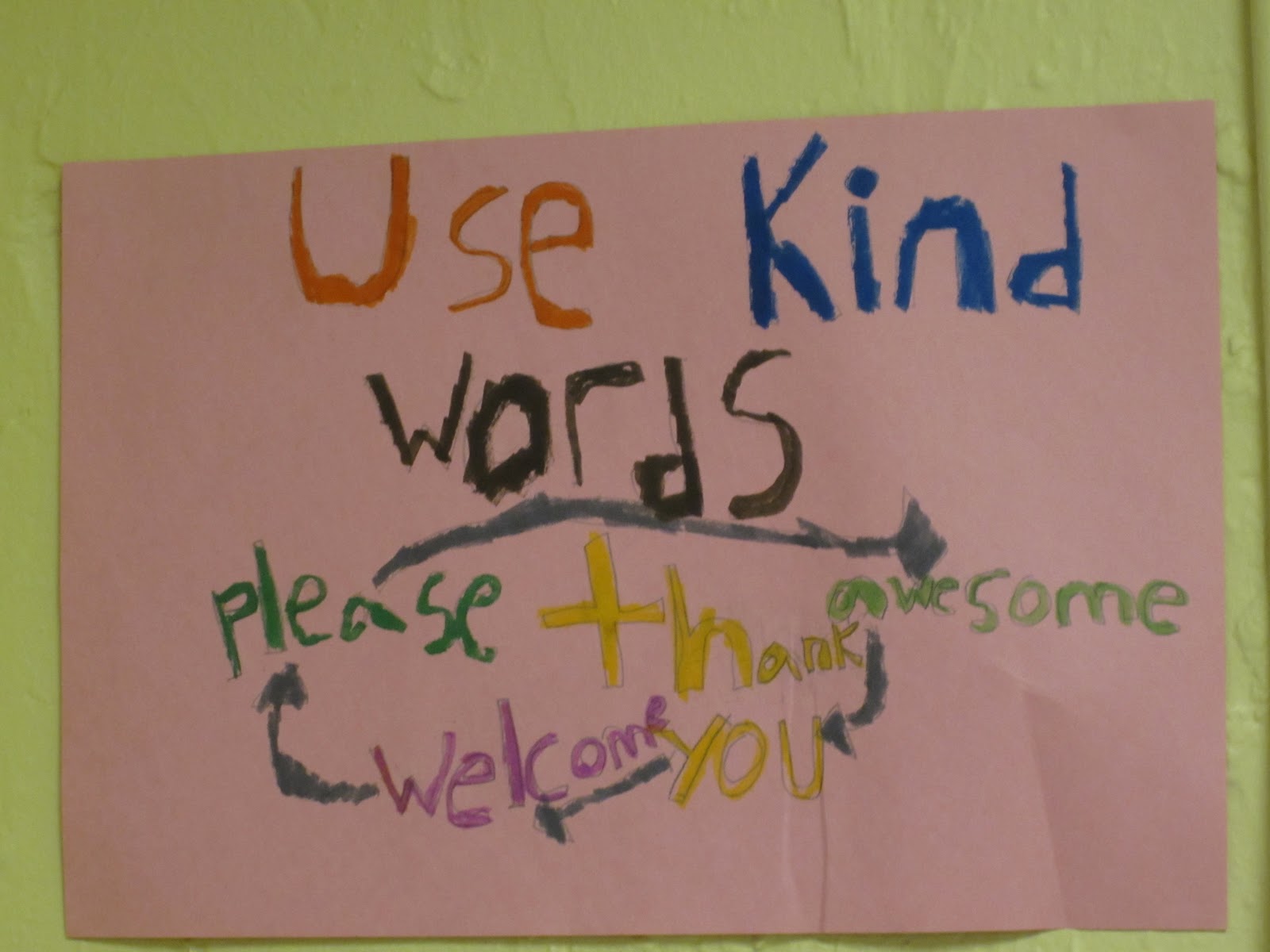
Many classes focused their entire day of study on making people feel kindness and welcome in our community. Mrs. Kappel's 2nd grade student's were so inspired by the day that they made signs for the school, to remind their peers to always be kind to one another.


We  closed our day together in community tefilah (prayer) with an emphasis on peace for everyone in our world.


It is a priority of our school community to ensure that everyone knows that they are welcome and to treat each other with kindness and respect. Together, we can ensure that bullying is never welcome in our community.

Thursday, February 2, 2012

Excercising our Minds & Bodies

The children of TBSCC are movers and moving!  I have the privilege of moving with all the Children's Center children.  We have a chance to solidify some of the learning concepts from the kinesthetic realm - we are having so much moving fun!  We "warm up" together - learning about our body parts and all the many ways they can move from head to toe, recognizing all the connections between the bones, muscles, and breathing; time, space and force (fundamentals of dance and movement in its many forms).  Each participant has a chance to lead the group finding their own way of moving across the room.

We have explored:  lines, circles, balance, qualities of  force:  floating to strong pushing or pulling with strength (defying gravity), spacial: personal space and communal space, stretching and contracting, expanding and narrowing, focusing; and time: rhythmic drumming, fast - slow, impulsive - smooth.  We took a journey to outer space and a magic carpet ride and experienced the individual uniqueness of a snowflake.  The children exercise their bodies, their minds and their senses are stimulated and articulated, and then we recenter ourselves to adapt again to the classroom energy, space and pulse.

Next week will be TuB'Sh'vat and we will act out growing as in the Giving Tree.  We are so blessed with such creative, imaginative, and developmentally exceptional children!  I love how they work together enriching our experiences.

Nancy Kreiger aka Dancing Nancy

Wednesday, February 1, 2012

A SUPER Congregational Connection that will BOWL you over...


vs.


Making a SUPER Congregational Connection


Temple Beth Shalom of Needham, MA and Larchmont Temple of Larchmont, NY have made a very friendly Super Bowl ‘reverse wager’.


If the New England Patriots win the 2012 Super Bowl, Larchmont Temple agrees to display in its front foyer one (1) appropriately colorful sign that reads: “Mazel Tov (!! מזל טוב) to the New England Patriots and Temple Beth Shalom of Needham, MA on winning the 2012 Super Bowl!!” A digital photograph of this display will be sent to Rabbi Jay Perlman for publication in the “Scroll.” This display will remain in the foyer for one (1) week. 


Also, should the New England Patriots win, Temple Beth Shalom agrees to send Larchmont Temple (c/o Rabbi Jeff Sirkman) one (1) case (12 packs) of New England famous NECCO Wafers and 2 dozen chocolate chip cookies from the Chipyard in Quincy Market, Boston. 


As well, Rabbi Jay Perlman and Rabbi Todd Markley agree to wear New York Giants jerseys for a day while at Beth Shalom.


If the New York Giants win the 2012 Super Bowl, Temple Beth Shalom agrees to display in its atrium one (1) appropriately colorful sign that reads: “Mazel Tov (!! מזל טוב) to the New York Giants and Larchmont Temple of Larchmont, NY on winning the 2012 Super Bowl!!” A digital photograph of this display will be sent to Rabbi Jeffrey Sirkman for publication in the Larchmont Temple Bulletin. This display will remain in the foyer for one (1) week.


Also, should the NY Giants win, Larchmont Temple agrees to send Temple Beth Shalom (c/o Rabbi Jay Perlman and Rabbi Todd Markley) one (1) crate of GUSS’ Pickles and one (1) NY famous Junior’s Cheesecake.


As well, Rabbi Jeffrey Sirkman agrees to wear a New England Patriots jersey for a day while at Larchmont Temple.


This SUPER contract has been entered into under Temple Beth Shalom and Larchmont Temple rabbinic supervision – via e-mail - in the spirit of fun and friendship.


הכל שריר וקים


With much anticipation for a phenomenal Super Bowl, all of this is valid and binding.


Temple Beth Shalom

670 Highland Avenue

Needham, MA


Larchmont Temple

75 Larchmont Avenue

Larchmont, NY


Sunday, January 22, 2012

Needham Art in Bloom - March 2-3-4, 2012


The Beth Shalom Garden Club will again team up
with the Needham High School Fine Arts Departmentfor their popular annual fusion of fine art and floral arrangement.

We invite you to experience
Needham Art in Bloom 2012.

Check out our website for details and
more photos of previous year's exhibits.

http://needhamartinbloom.com/


A flavor of previous years exhibits.


Thursday, January 5, 2012

Israel Trip - December 2011

This post originally appeared on Rabbi Sonsino's blog, “From Istanbul to Boston

Rabbi Rifat Sonsino
We just returned from a week stay in Israel a few days ago. We went only to Jerusalem, a city made holy by our memories, not for tourism but to spend time with the family, and celebrate my daughter Debbi’s 40th birthday and her 10th wedding anniversary to Ran, her Israeli husband. My wife Ines, Debbi, Ran and our two grandchildren, Avi and Talya, came along. It was a great trip, though very short. Here are some personal impressions.

This time I found a greater alienation between the secular and the fundamentalist religious groups. Jerusalem is turning into a “haredi” (extreme religious) city. One top Israeli executive told me, “Seculars Jews have already given up.” This may be an exaggeration but there is a kernel of truth in it. The month of December was marred by attacks on women’s civil rights: an eight year old girl was hit by extremists because she was not dressed modestly; some Orthodox soldiers refused to listen to the singing of female soldiers; a woman was asked to sit in the back of the bus but she refused. Many leading Rabbis condemned this anti-women attitude by saying, “Israel does not belong to the religious alone.” A number of secular Israelis raised banners in Bet Shemesh that read, “This will not be another Teheran.”

There was quiet between Israelis and Palestinians during our stay, but animosities are still present. One day I went to Abu Shukri, a well-known restaurant in the Old City, which displayed a Palestinian flag on its wall. I ordered pita, humus and “Israeli salad.” The waiter told me, “We don’t serve Israeli salad here,” only “Arabic salad.” That was curious because in our hotel the same salad was labeled “Israeli,” even though many Israelis call it “Arabic.”

The Palestinians I met in Jerusalem seemed content living among Israelis. The Palestinian life-guard at our hotel, a student at the University, told me that he had many Israeli friends and that the problem was with the extremists on both sides. I walked the streets of the Old City without fear. Yet, when we took the train from the Center of Town towards the Hebrew University, we were told to get out of the train outside of the Damascus Gate because of a “suspicious object.” A police robot quickly discovered that it was harmless, and we boarded the train again. A passenger told me, “We live every day with miracles here.”

Because of Christmas and Hanukah, Jerusalem was full of tourists, more than ever before. Consequently, traffic between mid-mornings to around 8 pm. was terrible. A trip from Har Hatzofim to Talpiyot that usually takes about 15 minutes by cab often took us more than an hour.

The economy of the country seems to be doing well. We saw lots of people shopping at stores and local Malls. The new Mamila Mall is magnificent. The Western Wall was full of tourists as well as local Israelis. We visited the tunnels by the Western Wall- an archaeological marvel. You see under a glass walk, ruins that go back to the First and Second Temple.

The best time, however, was spent with the family. We walked by the Tayelet, went to the Hebrew Union College on King David Street, visited the Hebrew University, walked through Ben Yehudah Street, bought gifts at Geulah, attended an Orthodox service on Shabbat Eve, and ate almost every night at our son-in-law’s parents’ home. Quite a treat. We also got together for a great meal with our Israeli family and friends at Abu Gosh, an Arab village between Tel Aviv and Jerusalem.

And we returned happy but tired. Our grand-children are ready to go back. We too.

Rifat Sonsino

Jan. 5, 2012