Showing posts with label Israel. Show all posts

Tuesday, March 11, 2014

Temple Beth Shalom Donates Winter Hats to Israeli Soldiers


In December, Temple Beth Shalom joyfully donated over 200 winter hats to sailors serving in the Israeli Navy.  Recently, we received the following letter of thanks along with a great photograph of the sailors aboard the Israeli Naval Ship Keshet.

Also below (after the break) are copies of the letter that Rabbi Perlman sent to the crew of the Keshet and the letter that our community received in return from Major Steven Gordon.


Currently, Temple Beth Shalom is working on another wonderful project to support Israeli soldiers.  This time, dozens of members of our community are hand-knitting caps that our own TBS community members will hand-deliver when we travel to Israel in December 2014 as part of our “TBS Israel Adventure.”  For information on how to knit or support this important effort, please contact Margie Glou (mglou@comcast.net).   


Thursday, January 5, 2012

Israel Trip - December 2011

This post originally appeared on Rabbi Sonsino's blog, “From Istanbul to Boston

Rabbi Rifat Sonsino
We just returned from a week stay in Israel a few days ago. We went only to Jerusalem, a city made holy by our memories, not for tourism but to spend time with the family, and celebrate my daughter Debbi’s 40th birthday and her 10th wedding anniversary to Ran, her Israeli husband. My wife Ines, Debbi, Ran and our two grandchildren, Avi and Talya, came along. It was a great trip, though very short. Here are some personal impressions.

This time I found a greater alienation between the secular and the fundamentalist religious groups. Jerusalem is turning into a “haredi” (extreme religious) city. One top Israeli executive told me, “Seculars Jews have already given up.” This may be an exaggeration but there is a kernel of truth in it. The month of December was marred by attacks on women’s civil rights: an eight year old girl was hit by extremists because she was not dressed modestly; some Orthodox soldiers refused to listen to the singing of female soldiers; a woman was asked to sit in the back of the bus but she refused. Many leading Rabbis condemned this anti-women attitude by saying, “Israel does not belong to the religious alone.” A number of secular Israelis raised banners in Bet Shemesh that read, “This will not be another Teheran.”

There was quiet between Israelis and Palestinians during our stay, but animosities are still present. One day I went to Abu Shukri, a well-known restaurant in the Old City, which displayed a Palestinian flag on its wall. I ordered pita, humus and “Israeli salad.” The waiter told me, “We don’t serve Israeli salad here,” only “Arabic salad.” That was curious because in our hotel the same salad was labeled “Israeli,” even though many Israelis call it “Arabic.”

The Palestinians I met in Jerusalem seemed content living among Israelis. The Palestinian life-guard at our hotel, a student at the University, told me that he had many Israeli friends and that the problem was with the extremists on both sides. I walked the streets of the Old City without fear. Yet, when we took the train from the Center of Town towards the Hebrew University, we were told to get out of the train outside of the Damascus Gate because of a “suspicious object.” A police robot quickly discovered that it was harmless, and we boarded the train again. A passenger told me, “We live every day with miracles here.”

Because of Christmas and Hanukah, Jerusalem was full of tourists, more than ever before. Consequently, traffic between mid-mornings to around 8 pm. was terrible. A trip from Har Hatzofim to Talpiyot that usually takes about 15 minutes by cab often took us more than an hour.

The economy of the country seems to be doing well. We saw lots of people shopping at stores and local Malls. The new Mamila Mall is magnificent. The Western Wall was full of tourists as well as local Israelis. We visited the tunnels by the Western Wall- an archaeological marvel. You see under a glass walk, ruins that go back to the First and Second Temple.

The best time, however, was spent with the family. We walked by the Tayelet, went to the Hebrew Union College on King David Street, visited the Hebrew University, walked through Ben Yehudah Street, bought gifts at Geulah, attended an Orthodox service on Shabbat Eve, and ate almost every night at our son-in-law’s parents’ home. Quite a treat. We also got together for a great meal with our Israeli family and friends at Abu Gosh, an Arab village between Tel Aviv and Jerusalem.

And we returned happy but tired. Our grand-children are ready to go back. We too.

Rifat Sonsino

Jan. 5, 2012

Wednesday, January 4, 2012

A Different Kind of Two State Solution


Ed. Note: Professor Aner Shalev at the Einstein Institute of Mathematics at Hebrew University in Jerusalem published this very "tongue-in-cheek" analysis of the current two-state solution existing in Israel today. We are grateful for his permission to share the piece (which first appeared in the newspaper Haaretz on January 4th in an article titled "The Haredi State").

Professor Shalev's opinion piece speaks about the current balance between orthodox and progressive, "religious" and secular, Haredi and other Israelis. What is your opinion of this divide? How can we work to balance the needs and desires of the "second state" Shalev describes while at the same time working to procure peace with a Palestinian  "second state"?

Shalev's post is written with a great sense of irony which translates well from the Hebrew it is originally written in. If you would like to read the original Hebrew language piece, it can be found here.


Have you always dreamed about living to see the establishment of two states for two peoples? The dream has long since come true. Fantasized about a welfare state? Look no further, it's here. Demonstrated for affordable housing? Behold, it is now reality. Striving for a country not drained by enormous security budgets? You've already got it. Demanded classes with few pupils, a long school day, and free higher education? All these dreams have come true in the Haredi State, living in peace alongside the State of Israel.

The Haredi State is a welfare state that would make the Scandinavians jealous. Most inhabitants are supported by pensions and stipends, and are almost completely exempt from income tax and municipal taxes.

The state initiates huge housing projects which are made available to the public for affordable prices. The education system of the Haredi State has many advantages in comparison to its parallels in neighboring countries: fewer pupils per class, and students that aren't required to sweat over core studies or practical studies, allowing them to calmly concentrate on spiritual issues.

Fortunately, the Haredi State has no army and needs none, thanks to the defense treaty with its closest neighbor. Yes, it's difficult to be a woman in the Haredi State, but one cannot interfere in the internal matters of a sovereign state.

Lately, several border spats have occurred between Israel and the Haredi state, events that included spitting, cussing and humiliating Israeli citizens. Still, as Israel's Prime Minister and many of the pundits explained, these were the actions of miniscule splinter groups which don't represent the majority of ultra-Orthodox who eagerly support the peace agreement with Israel, and its benefits. According to these pundits, the victims of the fanatic splinter groups, trying to enforce Haredi laws within Israel's borders, are not the women who have been attacked, but rather the Haredi population as a whole, which is completely innocent.

Some claim that the latest border events stem from innocent territorial misunderstandings. Does the bus line running from Ashdod to Jerusalem, boarded by Tanya, run in Israeli or Haredi sovereign territory? And line 49A, boarded by Doron, the female soldier? And the pavement in Beit Shemesh, where 8-year-old Naama was afraid to walk? Could it be that Tanya and Naama encroached Haredi sovereignty unawares?

The fiscal agreements between the two states, regulating funding of the Haredi state by Israeli taxpayers, are ironclad, as are the military agreements guaranteeing protection from the Israeli army and the judiciary agreement giving the Haredi State control over matters of matrimony, divorce and burial. However, the actual border line between the new states has never been clearly drawn. Therefore it is only natural that the rapid growth of the Haredi population causes the border line to be moved every so often, as part of a slow - and ultimately justifiable - annexation of Israeli lands. This process of Haredi expansion and Israeli retreats has only one danger: The Haredi State might eventually lose the hand that feeds it.

Interior Minister Eli Yishai recently declared with surprising honesty that a Haredi-only city will have no income, and since it won't collect local taxes it can't survive. Yes, it's nice to feel needed every now and then.

The issue surrounding the exclusion of women by the ultra-Orthodox should not be reduced to strong condemnations and local enforcement of the law, as the government wishes. Its an opportunity to hold a frank and honest debate about money, power and exemptions handed out by all Israeli governments to the Haredi public in exchange for political support, a deal with a high price for many Israelis. This was one of the main causes of the social unrest last summer.

Israel should avoid this debate only if it wishes to commit suicide.

Monday, December 12, 2011

Rosh, the Ring and Feeling Connected

This blog post from Molly Tobin (Wheaton College Class of 2013) was originally published in the Wheaton Wire on October 5, 2011.

This past week Jews around the world celebrated Rosh Hashanah, or popularly referred to by my eldest brother as “the Rosh.” Rosh Hashanah is the New Year on the Hebrew calendar and also marks the beginning of what is known as the High Holidays or High Holy Days; the period of time between the start of Rosh Hashanah and the end of Yom Kippur.

I made a decision a few years ago to not attend High Holiday services. It was not a protest against my religion or a rebellion against my parents. I articulated that I didn’t like that so many people attended services on these two days, and yet I had never seen most of them in synagogue on the other 363 days of the year. But I also felt services to be impersonal and insignificant for me. I felt connection in temple at other times of the year, whether during services or social gatherings, and I didn’t see a need to loose that connection simply because it was an important holiday. This year I have spent a lot of time thinking about connection and discovered that my connection to Judaism was made stronger during the times I least expected.

I have been immensely fortunate to travel to Israel three times in the last year. Each time I deplaned at Ben Gurion International airport in Tel Aviv, the first thing I did was put my sunglasses on. No matter what the weather was outside, inside the sunlight was always blinding. It was a tremendously dramatic scene to walk through the airport towards immigration and glance outside the window noticing it was cloudy, but then looking straight ahead and seeing sunlight consume the corridors.

Walking through the streets in Jerusalem, goose bumps constantly travel up and down my arms. The Old City is surreal and the atmosphere unique. My entire mindset changes and I feel comfortable, as if I am on a cloud. It is not that I compare being in Israel to a religious experience like sitting in synagogue (though it could be) it’s that I don’t need to be in a place of worship to feel touched and connected.

Part of the process of reconnecting with Judaism and reclaiming my faith has been to understand the ways in which I feel connected. I don’t always feel connected by sitting in synagogue – though I have a tremendous respect for those that do. However I felt connected this summer by spending multiple days with a Holocaust survivor; I have felt connected enjoying a casual cup of coffee with the Rabbi of my synagogue; I have felt connected by spending time with over 150 young Jewish adults in Israel over the course of my travels.

Yet, I have discovered it is an object that makes me feel the most connected: the ring I wear on my finger everyday. Inside it is inscribed to the memory of my Grandfather and the exterior reads “ani malkah bet malkim.” Literally meaning “I am the queen of the queens.” However figuratively it connects me as the descendant of my Grandfather and makes me a part of his legacy. The ring’s simple presence on my finger connects me to his love of Judaism, his pride in Israel, and his dreams and hopes for his family. This ring makes me feel connected to a man I never knew and helps me to feel Jewish in a way that I couldn’t attain from attending synagogue.

Wednesday, October 5, 2011

Rosh Hashanah, Blessings, Blogs, and a new Web Site...


Welcome to 5772! In the spirit of the New Year, and in the spirit of taking stock of our lives at this important time of the year, there are many exciting and new things happening with TBS online which I thought I would highlight here.

First, we have launched our newly updated web page. You can still find us at www.tbsneedham.org but when you log in, you will notice that the site has a slightly new look and feel. The calendar of events is now firmly linked in to all of our subpages, and we have several exciting new features which will be debuting in the coming weeks (and, in fact, later in this email).

To access much of the customized content, we have moved away from the model of a single user password for the entire congregation. Instead, you will have an individual user identity and password. If you have not already registered for a username and password, please do so by clicking here, and following the instuctions below:
  • Fill out the form to register for an Online username and password.

  • Enter key information: First Name, Last Name, Password and confirmation, Email, and Display Name

  • Enter required information on the Custom Tab: Timezone.

  • Enter optional information: Address, Avatar / Profile photo, Tags tab (to indicate your interests or affiliations), Custom tab (for privacy settings), and Activity tab (settings for how you want to be notified about activities within the Community Area).

You will be sent an email with a confirmation that your account has been established once you have been approved. Login information is per user, so everyone in your family can (and should) create their own username on our new page.

Also on the new page (as you begin to explore) you will find that we have updated the section including the Rabbi's sermons to feature the two sermons delivered on Rosh Hashanah. Rabbi Todd's erev Rosh Hashanah sermon entitled "Opening our Eyes to Blessings" can be found here and the list of blessings mentioned in his sermon can be found here. Rabbi Jay's Rosh Hashanah sermon entitled "Israel: Seeking Hope, Inspiration, and Courage to Act" can be found here. After Yom Kippur, we will update their respective pages with copies of this year's sermons.

Another new feature of our relaunched website are two new blogs for our K-5 and 6-12 learning programs. Following the incredible success last year of our pre-school blog, we have launched two fully interactive blogs with posts from your children's teachers, pictures from the classrooms, information about learning and curriculum, and lots of opportunities for ongoing conversation. We welcome you to come view how exciting learning at TBS is! The Elementary Learning (grades K-5) blog can be found here and the Teen Programs blog (grades 6-12) can be found here. Please note you must be logged into the Temple web site to access these pages. (If you would like to have a family member who is not a member of the Temple [i.e. grandparent, aunt, uncle, etc.] be able to access the blog, please note that they can also register for a username and password using the instructions above although their access to the webpage as a whole may be limited).

As a final reminder and update, we are in the middle of our Annual Shofar Appeal. This is time of year when we reach out to you asking for your support as we begin the year ahead. A pledge card was sent home to all members, and if you prefer to make a contribution online feel free to click here (you will be able to use Paypal to make a contribution by credit card).

We hope you enjoy the start of the New Year as well as the new ways in which we are using technology at the Temple. May the year to come bring you and yours many blessings!

Tuesday, August 9, 2011

Social Justice in the Social Media Age - A Crosspost from eJewish Philanthropy


Ed. Note: Today we feature a cross-post from eJewish Philanthropy, a daily newsletter focused on the Jewish Philanthropic world.

This post, written by Florence Broder, Chief Operations Officer for israelgives.org, explores how the use of social media is shaped by your community. She uses the backdrop of the current protests in Israel as a case study on the successful use of social media.

What do you think about the challenge the article lays out for us? In what way can our community at TBS embrace the vision of using social media "to reawaken the complacent into action"?

Special thanks to Florence Broder for permission to cross-post her article to the Temple Beth Shalom blog.


When Allison Fine was in Israel in May, she said Israelis have so much to say, it can’t fit into 140 characters. Yet Israelis are a population that live for text messaging – it’s even how they pay their parking meter. I constantly try to make sense of the disparity between the two Israels: one being the hi-tech center of the world; the other, a country not that can’t use the tools to communicate. During June’s Israeli Presidential Conference, everyone applauded the great coverage on Twitter, but I couldn’t help but ask why was it all in English? Where were all the Israeli Hebrew tweeters?

However, the developing protests in Israel paint a different picture. The need to communicate has made tweets a catalyst for change and a revolutionary spirit. Empowered by social media, the Israeli public has been galvanized in the quest for social justice, the mantra of the movement. The Tent Protesters quickly launched a WordPress site designed by Code Patuach that has the elements that we all want – a social, interactive site, with a clear call-to- action, and consistent branding.

The site homepage offers you photos, videos and blogs. If it’s community you are looking for, there is a Hebrew and English Twitter feed and you can follow the #J14 hashtag. (In case you were wondering, it’s J14 because the movement began on July 14th, which is also Bastille Day.) There is a Facebook page which allows fans to identify with the movement by offering them badges and other opportunities to get involved. Want to leave a comment about a newspaper article? You can do it right from the homepage. There is even a live chat feature so you can talk to protesters right on the spot! And if you want to support the movement financially, the is a clearly labeled donate button.

The protesters have been so successful because they have been strategic in how they have empowered the public to get involved. They have created clear and consistent messaging to propel the public forward. They have leveraged social media to give a voice to people who thought they were voiceless. They have created community for people who felt alone in their plight. As the movement grows, so does the reawakening of the Israeli public who are starting to actually believe that they can effect change and re-envision a different future for Israel.

As you consider issues in your own community, reflect on the success of social media in bringing together Israelis from all walks of life. Think about how the tools can do the same for your community. Take a fresh look at your organization’s website and think about how you too can integrate social media into your website to reawaken the complacent into action.

By Florence Broder

Sunday, May 29, 2011

A Shabbat Speech on the NFTY-EIE Semester in Israel

Ed. Note: We are taking a quick break from our Ten Commandments posts to share the following post. This was presented at Friday night services this week by Temple member Mikah Atkind who spent her fall semester on the EIE Program in Israel. More information about the program can be found at http://www.nftyeie.org/. Two additional temple members, Molly Shuman and Tzipi Crandell, have been accepted to the EIE program for Fall 2011.

Shabbat shalom!

On the 9th of Av, 586 BCE, the first Beit Hamikdash, also known as the first temple, was destroyed. Subsequently, the Jewish people were exiled to Babylon. Exactly 656 years later, the second Beit Hamikdash was destroyed. 65 years after that, Beit Har was destroyed. This was the last village standing, and the last one to be destroyed, during the Bar Kochva Revolt. In 1492, the Jews were expelled from Spain. In Tach-Tat, or 1648-1649, the Chmelnitsky Massacre took place in Russia. In 1881, the first wave of pogroms against the Jews in Russia led to the first Aliyah to what is now the State of Israel. In 1939-1945, as many people know, was the Shoah, or the Holocaust, in which 6 million Jews were murdered by the Nazis. On Hay B’Iyar, Tashach, or May 14, 1948, the state of Israel was created. These events, both tragedies and what subsequently seem like miracles have shaped the Jewish people since our beginning, about 4,000 years ago in the time of Avraham, Yitzhak, Ya’akov, Sarah, Rivka, Rachel, v’Leah.

This past fall, I spent four months on the NFTY-EIE High School in Israel. Run by NFTY, the youth organization of the URJ, this program allows Jewish high school students from all over North America the opportunity to travel and study in Israel. Going into the program, I expected that I would be with a bunch of your typical NFTY kids, like myself. For those of you who have never been a NFTY kid, this involves singing Jewish songs until you lose your voice, being super overenthusiastic about NFTY, and hugging. A lot. However, when I arrived at the airport, I realized that this was not the case at all. While there were some of those stereotypical NFTY kids, we had an extremely diverse group. Roey spent the first three years of his life living in Tel Aviv, Noah goes to a conservative Jewish day school, and knows pretty much everything you could ever want to know about Torah, and Madeleine’s from Texas…and talks like Miley Cyrus. We had 21 guys and 24 girls; six sophomores, 33 juniors, and six seniors; two Canadians, two Eisnerites, and two from Massachusetts.

Every day, we were responsible for waking each other up and getting to Hebrew by 8:30, where we would learn for almost two hours. After a short break, we had Jewish History for three hours. After our Jewish studies were over, we had lunch, and then all of our general studies classes, such as math, history, English, etc. We had school from 8:30 AM until 7 PM, yet no one seemed to mind. After our last period, we went to dinner, then had Hoda’ot, or announcements. Only then could we start our homework, or if we finished, socialize. However, normal days such as these weren’t common. Many times, we would go on Tiyulim, or field trips, for Jewish history, which could last for as little as a couple of hours, or as many as 8 days, such as our trip to Poland in which we visited Auschwitz, Birkenau, Majdanek, and other death camps and important sites in the context of the Shoah, and tried to absorb in the emotions and impact of the Holocaust. In addition to our Jewish History-based tiyulim, we spent six days hiking from the northeastern side of Israel to the Mediterranean sea, and spent five days at the S’dei Boker army base near Beersheva, in an intensive high school Israeli army program called Gadna.

We began friendships with Israeli teens, both those who were living on Kibbutz Tzuba with us, and others in a small private high school called the Havruta School, near Netanya. We became actively involved in Israeli politics, creating a mock campaign and election for some of the main political parties, including Likud, Shas, and Avodah. We bargained for dried fruit, nuts, rugalach, and other treats at the Shuk in Jerusalem, trying to practice our Hebrew, while the vendors only wanted to practice their English. We bought ice cafes and mozzarella sandwiches at Aroma, invested in the Israeli economy at TNT and other stores at the Malcha Mall, and even went to a teen club until 4 in the morning with our Israeli host families…even though we weren’t supposed to be out past midnight. Seven of my friends and I even got to attend a conference of the Jewish People Policy Institute, for which our English teacher works, and sit two rows behind BB Netanyahu and Natan Sharansky, and listen to both of them speak on the topic of Judaism within Israel and around the world. Of course, we visited many of the tourist attractions as well, in connection with our Jewish History curriculum. We hiked up to the top of Massada to learn about the mass-suicide of the Zealots while trying to defend themselves from the Romans; we visited Tel Aviv to learn about the formation of the city, and their combination of old and new; we visited Sataf to learn about ancient agriculture and the cycle of the Judges and the Kings.

So why did I go in the first place? Well, first we need to think of the reasons behind why one would go. There were 45 of us on the EIE Fall 2010 Semester. In Hebrew gematria, 45 is מ -- מה is equal to 40, and ה is 5. Together, these letters spell mah: what? What is the significance of our past? What is the importance of Israel? What are we as a people? What should we strive to be? What can we gain out of this experience? What were we doing this for? Well, switch the מ and the ה, and you end up with המ—them. While we may have gotten amazing friendships, incredible amounts of knowledge, and an unbelievable four months of adventures, stories, and experiences out of this program, in the long run, we weren’t doing it for ourselves. We were doing it for them: those of the past, and those of the future. We went to keep the covenant between Abraham and G-d, as G-d mentioned in Genesis chapter 17, verse 7: “And I will establish my covenant between me and thee and thy seed after thee throughout their generations for an everlasting covenant, to be a G-d unto thee and to thy seed after thee.” We went to preserve Jewish values, customs, traditions, and stories, as well as the Jewish homeland for future generations. We went to keep Judaism alive in our home here in the Galut—the diaspora—and in Eretz Yisrael.

תודה רבה ושבת שלום

Saturday, May 28, 2011

The First Commandment: A Personal Perspective by Rob Spiegel

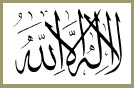
The image to the left is artistic rendering of the Arabic translation of the First Commandment.

Ed. Note: This is the first post in a series of ten which will be presented as a "count-up" to Shavuot. The text comes from TBS congregant Rob Spiegel who presented these words at a special congregational meeting celebrating the passage of our new By-Laws. Please join the conversation by adding your personal reflection of the 1st Commandment as a comment to this post. What does the 1st commandment mean today? Given the recent changes in Egypt, what does it mean to remember that we were "brought out of the land"? Where do you feel most at home?

I, Adonai your God, (am the one) who brought you out of the land of Egypt, from a slave house.


In performing this text study, we are looking forward to Shavout and the adoption of new bylaws for TBS. But, for a moment, allow me to look back to Pesach and ask how is this Commandment different from the other commandments. Are we being told by God to do something or refrain from doing something? Or, are we being told to believe? Is it possible for God to command belief?

Commentators differ, and we could discuss this point for hours, not the couple of minutes I have now. But, as we are reminded at Pesach, we were each individually and together as a community brought by God out of Egypt, out of a slave house. Consider the drama of the situation of the people actually there at the time. Having been slaves and having seen the plagues, hastily prepared to leave Egypt, crossing the sea into the desert, and watching Moses bring the tablets from Sinai, this commandment served to inform them, and continues to remind each of us and our community as a whole, who is responsible for freedom and who therefore has the authority to give the law.

When I was in college, I spent a semester abroad in Israel. Like so many, being in Israel was a deeply meaningful experience and I felt more connected to the Jewish people. During that semester I did a week-long side trip to Egypt. My feeling of connection to our people was even greater when I returned to Israel. When I returned, I felt at home, maybe more a part of our people than ever before or since in my life.

We here continue to be part of this community, and here at TBS we are a community within a larger Jewish Community. In accepting the nomination to serve on the Board of Trustees, I hope to continue to work to build community within the TBS community/communities.

-Rob Spiegel

Thursday, November 18, 2010

What Would We Do?

Yesterday the Boston Globe http://www.boston.com/news/local/massachusetts/articles/2010/11/17/newton_synagogue_cancels_talk_by_israel_critic/reported that Temple Beth Avodah in Newton made a decision to "cancel an event with the president of J Street, a lobbying group that supports liberal positions on Israel, because of vigorous objections from some members of the congregation regarding J Street's politics." The Globe further reported that the event, a conversation between the J Street president and the editor of the Jewish Advocate, was moved to another location.

The Globe described J Street as believing that the U.S. should encourage the peace process in the Middle East, even if it means disagreeing with Israel, and reported that the group has come under fire for accepting funds from Holocaust survivor George Soros who has been a critic of Israel and of US policies supporting Israel.

The Globe article ended with a quote from Jonathan Sarna from Brandeis, who termed the community's question as "What is J Street? Is it simply a progressive organization that supports a different policy for the state of Israel, or is it a Trojan horse for anti-Israel activists?"

We don't know the details of what transpired within Temple Beth Avodah that led to this decision, and we are therefore not in a position to judge Temple Beth Avodah or its decision.

What we can do, however, is ask the following: how would our community respond if members of our congregation voiced strong objections because a perceived critic of Israel was a planned speaker at Temple Beth Shalom? What steps would we want to take under such a scenario?